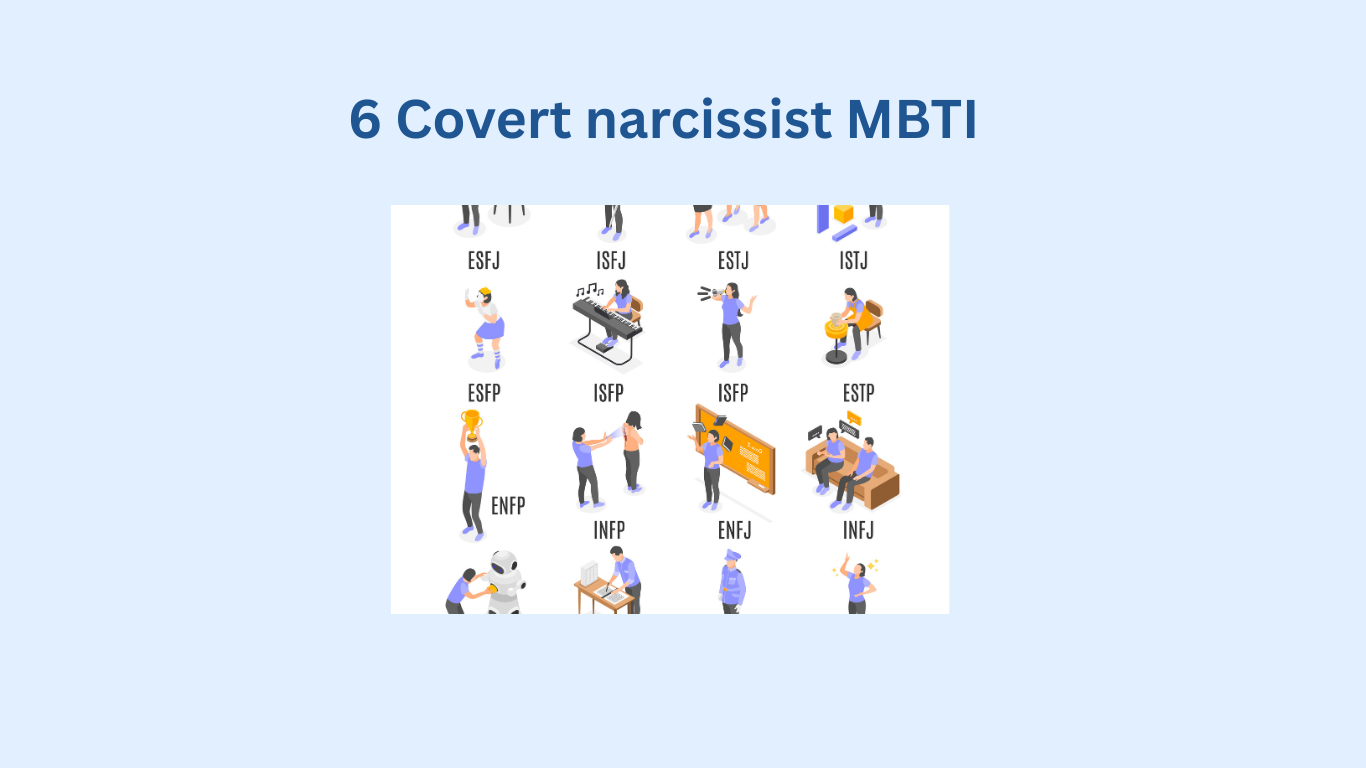
Anyone can have any mental health condition, regardless of their personality type. However, some MBTI types may show the traits of a covert (or vulnerable) narcissist.
In this article, we will explore 6 covert narcissist MBTI types that commonly exhibit covert narcissistic tendencies.
1. ISFJ (Defender)
ISFJs are the backbone of families, friendships, and communities. They remember your coffee order, your mother’s name, and the anniversary of your difficult day. They ask for little in return because their reward is the stability and happiness of those they love.
At their healthiest, ISFJs are true altruists.
However, this same altruism can become a covert narcissist, especially an “altruistic narcissist”.
An ISFJ altruistic narcissist does not stop giving. They simply attach invisible strings to every act of service. In other words, the generous behavior becomes more conditional.
They keep a mental list of every slight and every forgotten thank-you. But the resentment never appears as an open confrontation.
Instead, it leaks out through passive-aggressive remarks, subtle guilt-tripping, a growing victim narrative, or a quiet, chilly disappointment that others are expected to notice without being told.
2. INFP (Mediator)
INFPs are the dreamers and idealists of the personality world. The most dominant force in an INFP’s life is their internal value system. They are constantly filtering the world through a lens of “Is this right? Is this good? Is this authentic?” They process emotions internally and believe in the potential for good in the world and in people.
Yet the very traits that make INFPs compassionate and creative can lean toward a painful self-absorption that resembles covert narcissism.
Their belief in potential becomes a source of constant disappointment. When the world inevitably falls short of their high standards, resentment can build.
Instead of using their values to guide themselves, they may begin using them to judge others. Their internal feeling (Fi) shifts from “I must be true to myself” to “I am morally superior to everyone else.”
3. INTP (Logician)
INTPs enjoy solving puzzles, debating ideas, or diving into theoretical arrangements. They value freedom and mental stimulation over socializing for its purpose. Their inner world is rich and imaginative, but they struggle to turn ideas into action or to connect emotionally with others.
However, their strong focus on ideas and independence can sometimes slide into covert narcissistic traits.
They might assume their perspective or insights are superior and expect others to recognize it. Instead of openly seeking attention, they may subtly dismiss or minimize others’ contributions, or quietly resent being “misunderstood.”
Their tendency to detach emotionally can make them appear indifferent or cold. In relationships, they might prioritize intellectual validation over empathy. They may use logic as a shield to avoid accountability or emotional intimacy.
4. ISTP (The Virtuoso)
ISTPs prefer learning by doing rather than following theory alone. They enjoy activities that allow them to apply their skills practically, whether it’s mechanics, sports, or hands-on projects. They can appear insensitive or indifferent to others’ feelings.
Similarly to INTPs, ISTPs can show covert narcissistic traits by quietly assuming their skills or insights make them superior.
They may dismiss others’ opinions or emotional needs, using competence and efficiency as a shield to avoid accountability. Their aloofness and independence can subtly reinforce a sense of self-importance without overt grandiosity.
5. ISFP (The Adventurer)
ISFPs enjoy experiences that allow them to express themselves creatively or immerse themselves in sensory or emotional experiences. They value authenticity over conformity and make decisions based on feelings rather than logic. Sometimes, they are overly private or reluctant to express their inner thoughts.
Yet, in certain situations, their desire for personal authenticity and recognition of their unique aesthetic or moral perspective can tip into covert narcissism.
They might subtly manipulate situations to receive validation or admiration without appearing overtly self-centered, framing their needs as sacrifices for others or cloaking their entitlement in humility.
Passive-aggressive behaviors, guilt-tripping, or holding grievances can surface when their contributions go unnoticed, and they may privately feel that others fail to appreciate their depth, creativity, or emotional labor.
6. ISTJ (Logistician)
ISTJs are responsible, rule-abiding, and reliable, making them successful in work and relationships. Their focus on facts and details allows them to solve problems systematically. ISTJs can be rigid and resistant to change, struggling with flexibility or new approaches.
They may suppress emotions and come across as overly critical or detached. Their strong sense of duty can sometimes lead them to neglect their needs or the feelings of others.
A covert narcissistic ISTJ would weaponize this. They would follow the letter of the law with rigid, self-righteous precision, not to uphold the system, but to serve themselves, feel superior, and punish others.
They will also habitually point out flaws, suggest better (their own) methods, or belittle ideas that aren’t grounded in precedent or “tried-and-true” methods.