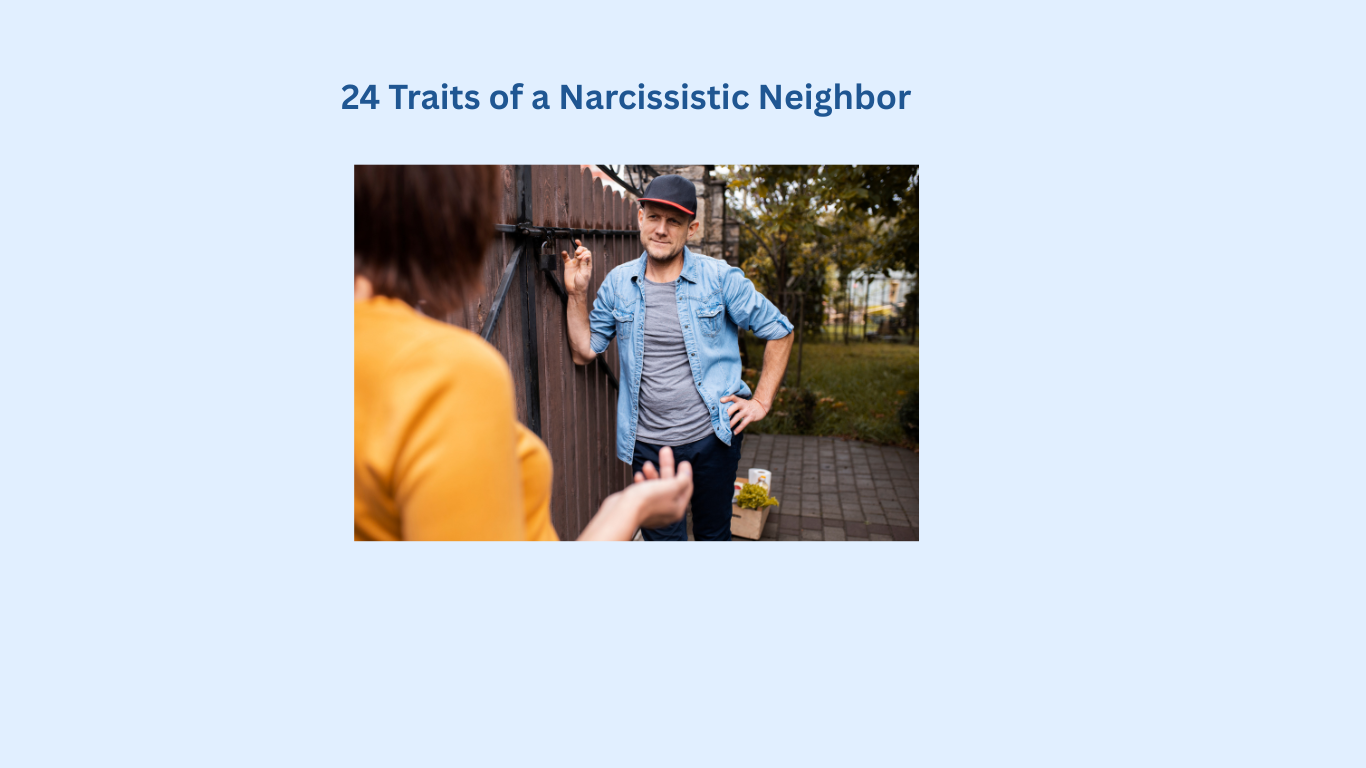
I had a narcissistic neighbor, and living next to them felt like a nightmare. They would occasionally give me things I hadn’t asked for, like leftover food or random knick-knacks (a candle that was clearly half-burned).
At first, it seemed harmless, maybe even kind. But then, they’d come back later asking for favors, acting as if I owed them something in return. Could I watch their dog for the weekend? Help them move a couch?
It didn’t take long to realize that what looked like generosity was actually a transaction that they initiated without my consent.
And that’s the thing about narcissistic neighbors. They don’t announce themselves. By the time you see the manipulation, you’re already stuck in their game. However, once you learn the techniques, your response becomes intentional rather than reactive.
In this post, we’ll break down 24 traits a narcissistic neighbor may show.
1. They spy on or monitor your activities
A narcissistic neighbor may spy or invade your privacy to gather information they can later use to manipulate you or control situations.
They might sneak up on conversations, peer through windows, or meticulously track movements to gather information.
This helps them maintain power, identify when you’re most vulnerable or accessible, and weaponize what they discover.
2. They brag excessively
Conversations with narcissistic neighbors revolve around how successful, wealthy, talented, or superior they are compared to others.
Their goal is usually admiration. They want others to see them as more important or more accomplished than everyone else around them.
3. They copy your improvements
Have you ever noticed a neighbor suddenly making the same home improvements after you do?
Narcissistic neighbors struggle with comparison and competition. Rather than finding inspiration naturally, they may feel threatened by anything that makes you stand out positively.
So, they imitate your ideas to compete or reclaim attention.
This could involve landscaping changes, outdoor decorations, paint colors, security systems, or even lifestyle choices.
4. They spread gossip and rumors
A narcissistic neighbor spreads gossip to manipulate social interactions. It helps them divert attention from their flaws, isolate or undermine you, and stay the center of attention.
As a result, they may share exaggerated stories, private details, or outright false information about others in the neighborhood.
5. They create unnecessary drama
Narcissists depend on drama to keep everyone off-balance, create emotional dependence, and maintain control over those around them. They exaggerate conflicts, spread rumors, and pit people against each other.
When no one knows who to believe, the narcissist positions themselves as the only reliable narrator. This makes it easier for them to manipulate, isolate, and control.
6. They stir conflict between neighbors
Narcissistic neighbors intentionally divide people. They might tell different stories to different neighbors, create misunderstandings, or encourage tension between residents.
This tactic allows them to maintain influence and feel powerful within the social environment.
7. They act passive-aggressively
A passive-aggressive narcissist neighbor may appear friendly, but they subtly attack you.
For example, they may purposely block access, make excessive noise after disagreements, or “forget” to follow through on obligations, or deliberately make life inconvenient for you.
This allows them to avoid accountability while still expressing negative feelings.
8. They invade your privacy
Privacy boundaries mean very little to narcissistic neighbors. They may ask intrusive questions, enter personal spaces without invitation, or interfere in matters that do not concern them.
Some may listen to conversations, examine your property too closely, or pressure others for personal information.
9. They exploit kindness
A narcissistic neighbor uses your kindness for their benefit.
They may repeatedly ask for favors, borrow items without returning them, or rely on your help while offering little consideration in return.
10. They feed false or misleading information
A narcissistic neighbor may twist facts, exaggerate events, or intentionally mislead people to shape opinions in their favor.
11. They create a fake sense of closeness
Some narcissistic neighbors move unusually fast in building relationships. They may overshare personal stories, act overly familiar, or insist on closeness before trust has naturally developed.
Once they gain emotional access, they may begin gathering information, creating dependency, or expecting loyalty.
12. They weaponize private information
When you confide in a narcissistic neighbor, your private struggles like financial concerns, family matters, or personal insecurities can become tools for manipulation.
They may later weaponize your words during arguments, spread them as gossip, or use them to publicly embarrass you.
13. They compare themselves to you
Narcissistic neighbors view life as a competition. Instead of coexisting peacefully, they constantly measure themselves against those around them.
They may compare homes, income, appearance, family life, possessions, or social status. Conversations frequently become opportunities to prove superiority or highlight differences.
14. They try to one-up everyone
A narcissistic neighbor tries to outshine or overshadow your experiences, achievements, or possessions to appear superior.
No matter what you share, a narcissistic neighbor will always counter with something they claim is bigger or better.
If you buy something new, they buy something bigger. If someone shares good news, they immediately redirect attention toward themselves.
15. They display jealousy and envy
A narcissistic neighbor resents your achievements, possessions, or relationships. They feel threatened by anything that highlights their perceived flaws.
Instead of celebrating your success, they may downplay it, spread negativity, or try to sabotage it to feel superior.
16. They micromanage your actions
A narcissistic neighbor may micromanage your actions to control your behavior, decisions, or lifestyle, even when it’s none of their business.
They impose their opinions, criticize your choices, or insist on doing things “their way.”
17. They criticize how people live
Narcissistic neighbors criticize lifestyles, parenting choices, appearances, routines, or financial decisions.
These comments may be subtle or openly rude. Either way, the goal is to elevate themselves by putting others down.
18. They ignore personal boundaries
Narcissistic neighbors may show up uninvited, demand attention at inappropriate times, pressure you into conversations, or disregard your requests for privacy.
When you enforce boundaries, they may react with anger, guilt-tripping, or passive-aggressive retaliation.
19. They demand special treatment
A narcissistic neighbor believes normal rules should not apply to them. They may expect exceptions, privileges, or constant accommodation from others.
This can involve parking violations, noise issues, shared property disputes, or community rules. They become defensive or outraged when treated like everyone else.
20. They punish when challenged
If someone disagrees with them, sets boundaries, or questions their behavior, they may respond with hostility.
Punishment can include silent treatment, gossip, intimidation, complaints, or deliberate inconvenience.
21. They hold resentments over small issues
Narcissistic neighbors struggle to let go of perceived slights. Minor disagreements can become long-term grudges that continue for months or even years.
22. They provoke reactions intentionally
Some narcissistic individuals deliberately try to upset others. They may make provocative comments, create disturbances, or engage in irritating behavior to trigger emotional reactions.
Once someone becomes angry or frustrated, the narcissistic neighbor may then portray themselves as the victim while blaming others for the conflict.
23. They gaslight during disagreements
A narcissistic neighbor may deny obvious actions, rewrite conversations, or insist events happened differently than they actually did. Even when evidence exists, they may confidently reject responsibility.
24. They embarrass others publicly
Narcissistic neighbors may mock, insult, or criticize others in front of people to gain attention or establish superiority.
This behavior can occur during neighborhood gatherings, online community groups, or casual social interactions. They may disguise cruelty as humor while dismissing the emotional impact on others.
Conclusion
If you recognize several of these traits in your neighbor, you are in a toxic situation.
However, the important thing to understand is that you cannot change or “fix” a narcissist.
Logic, fairness, and mutual respect rarely work because they are focused on control and entitlement.
Instead, focus on protecting your peace with these strategies:
- Gray Rock method: Stay calm, give short answers, and don’t share personal information.
- Document everything: Keep records of texts, incidents, dates, and photos.
- Set Strong boundaries: Use fences, cameras, locks, and clear limits.
- Avoid the drama: Don’t gossip or recruit neighbors against them.
- Get legal help if needed: Take threats, harassment, or damage seriously.
You don’t win with a narcissistic neighbor by arguing endlessly. You win by protecting your peace, enforcing boundaries, and refusing to engage in their chaos.





Pingback: How to Deal With a Narcissistic Neighbor? (9 Powerful Tactics)