I once saw two people arguing, and one of them called the other a “vulnerable narcissist.” The accusation seemed to come out of nowhere, and the other person looked confused.
This moment stuck with me because it reflects a broader trend I’ve noticed, particularly on social media. Terms like “narcissist” get thrown around quickly, amplified, and stripped of context, because they grab attention and feel like a clear-cut explanation for complex interactions.
I know narcissism’s meaning, but what is vulnerable narcissism? And if you’re not familiar with it, let me walk you through it.
Let’s go!
Narcissism meaning
At its simplest, narcissism is the attempt to appear (not to be) admired and superior without having the achievements, character, or contributions to justify it. Those with narcissistic traits try to prove they are better than others without putting in the effort, skill, or ethical behavior that earns genuine respect.
So, instead of building self-worth from the inside, they try to manufacture it from the outside through behaviors such as:
- Bragging: Highlighting themselves instead of letting their actions speak.
- Putting others down: Creating the illusion of being superior by diminishing those around them.
- Taking credit for things they didn’t do: Claiming accomplishments that aren’t theirs to boost their image.
However, narcissism exists on a spectrum. Everyone may show some narcissistic traits from time to time. Yet, it becomes a personality disorder only when these traits are persistent, rigid, and cause significant damage.
Furthermore, narcissism can manifest in different forms, depending on the specific strategies an individual uses to assert their superiority. These types include, but are not limited to, grandiose narcissism, vulnerable narcissism, communal narcissism, and altruistic narcissism.
And in this article, we will focus on vulnerable narcissism.
What is vulnerable narcissism?
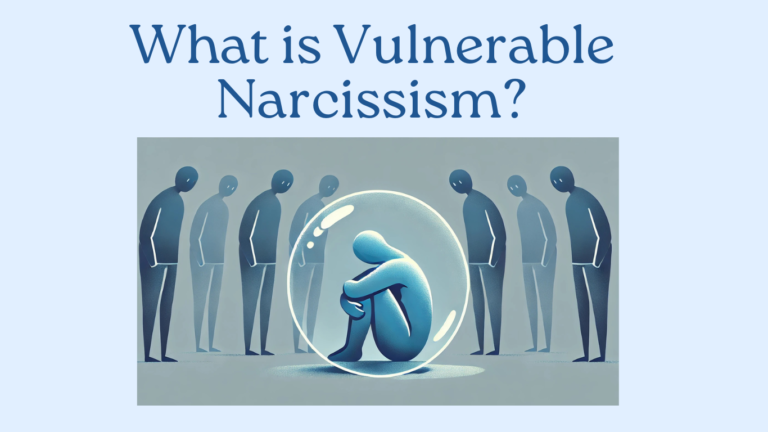
A vulnerable narcissist, aka a covert or fragile narcissist, feels superior but lacks the confidence to express it openly. Because they are too insecure to assert themselves like a grandiose narcissist, they communicate their entitlement in covert, passive ways. That internal conflict is what defines the vulnerable narcissist.
They appear sensitive, introverted, or even shy, yet they share the same core traits: entitlement, self-centeredness, and an intense need for validation. To satisfy these needs, they rely on subtle, passive-aggressive tactics and a facade of vulnerability.
Tactics of the vulnerable narcissist
The tactics of a vulnerable (or covert) narcissist are subtle, indirect, and designed to elicit sympathy, control, and admiration without appearing aggressive.
Here are the key tactics they use:
- Portraying themselves as misunderstood, unappreciated, or persecuted.
- They remember your past mistakes or vulnerabilities and use them against you to win an argument or deflect criticism
- They subtly deny events, minimize your feelings, or twist conversations to make you question your memory, perception, and sanity
- Withholding communication and emotional availability to punish and control you
- They dictate when, what, and how long you talk.
These are just a few examples. Our research has identified 22 distinct tactics vulnerable narcissists use to maintain control while preserving a facade of fragility and innocence.
If these patterns resonate with you, the full breakdown in our e-book will help you recognize each tactic clearly, understand the psychology behind it, and learn practical ways to respond without getting pulled back into the cycle.
Causes and development of vulnerable narcissism
The following factors shape how someone sees themselves. And they help lay the groundwork for vulnerable narcissism.
Childhood trauma and attachment styles
The roots of vulnerable narcissism lie in early life experiences and disrupted attachment styles. Childhood emotional neglect, where a child’s emotional needs are ignored or dismissed, can play a significant role.
When parents fail to provide validation or support, the child may grow up feeling misunderstood, unworthy, and desperate for external approval. This unmet need for emotional connection can accelerate the development of vulnerable narcissism as a coping mechanism.
Trauma, such as bullying, abandonment, or abuse, can also contribute. These experiences amplify feelings of inadequacy and vulnerability, pushing individuals to adopt narcissistic defenses.
To shield themselves from shame or powerlessness, they may construct a fragile sense of superiority, masking their deep-seated insecurities.
Genetic and biological factors
Research suggests that biological factors may also play a role. Imbalances in brain chemistry, particularly in areas related to emotional regulation and self-esteem, could contribute to narcissistic traits. When these systems are disrupted, individuals may rely heavily on external validation to stabilize their shaky self-worth.
Psychological impact of vulnerable narcissism in relationships
Vulnerable narcissism has a profound psychological impact on those around them, particularly in close relationships. Here’s how it influences others:
- Emotional Drain: Constant need for validation leaves others exhausted and overwhelmed.
- Walking on Eggshells: Fear of triggering hypersensitivity creates anxiety and tension.
- Manipulation: Guilt-tripping and passive-aggressive tactics erode trust and self-esteem.
- Feeling Unseen: Lack of empathy makes others feel ignored or undervalued.
- Fear of Abandonment: Clinginess or jealousy suffocates others, pressuring them to constantly reassure.
- Resentment and Envy: Subtle criticism or undermining damages others’ confidence.
- Isolation: Discouraging outside relationships leaves others dependent and isolated.
- Long-Term Mental Health Effects: Prolonged exposure can lead to anxiety, depression, or low self-worth.
Vulnerable narcissism creates a one-sided dynamic that harms your emotional well-being.
Recognizing these patterns is key to setting boundaries, seeking support, and fostering healthier relationships.
Conclusion
Vulnerable narcissism strains relationships, creating emotional turmoil for everyone involved. Traits like hypersensitivity, manipulation, and a constant need for validation can leave others feeling drained and undervalued.
These behaviors also lead to tension, resentment, and emotional exhaustion, making it difficult to maintain healthy connections.
For that reason, it’s important to understand vulnerable narcissism and its impact on protecting your mental health.
Read: 20 Facts About Narcissists: A Narcissist Checklist For Letting Go