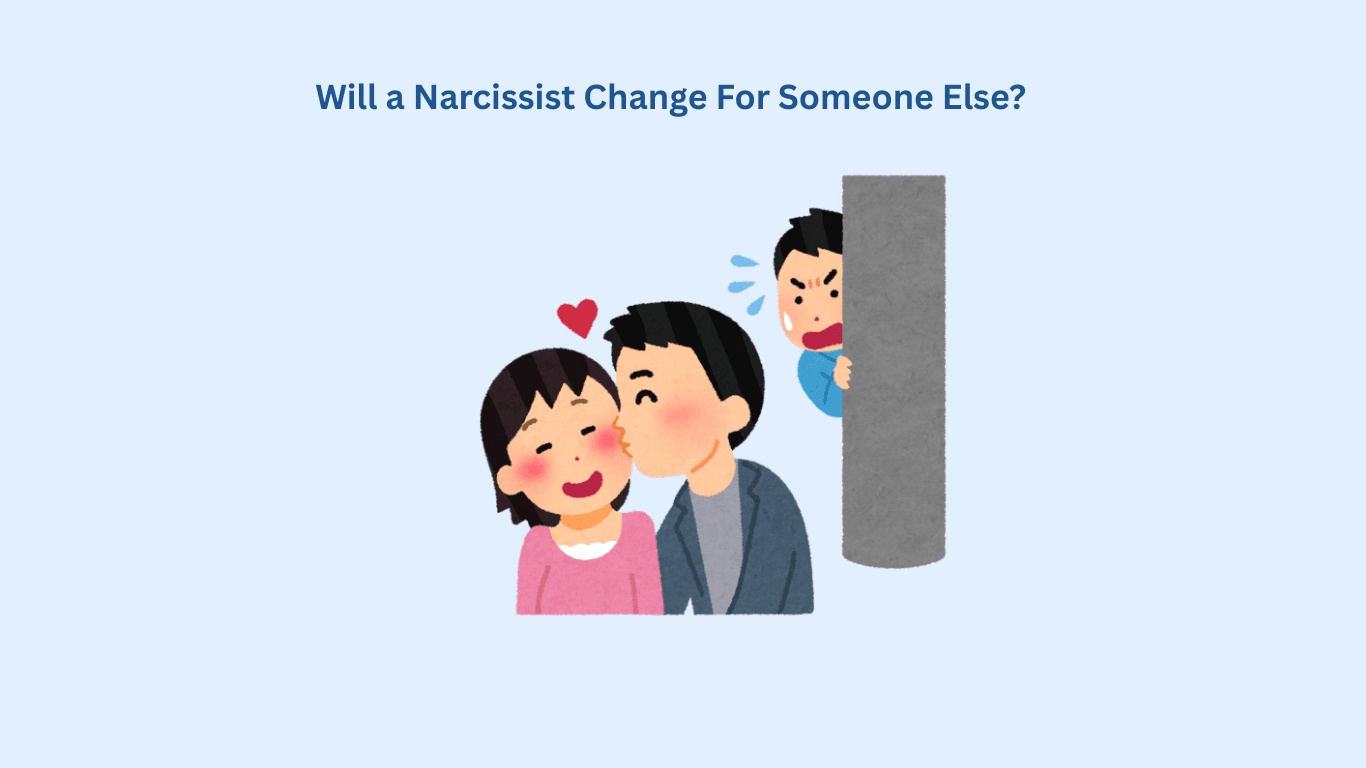
Will a narcissist change for someone else?
The answer is NO.
A narcissist will never change for someone else. Not for you, not for their next partner, not for their children, and not for anyone else who enters their life.
Let’s explore why this is, what kind of changes occur, and why it’s so easy to believe they’ve changed for “the right person.”
1. They will change their behavior temporarily (to secure supply)
If the narcissist discovers they’re losing control, they may suddenly become kind, apologetic, or romantic again. They might:
- Suddenly become attentive and affectionate
- Promise to go to therapy
- Acknowledge their faults (superficially)
- Offer grand gestures of love or commitment
- Agree to all your conditions and boundaries
These temporary improvements can convince you that change has finally happened.
In reality, that’s a performance meant to regain control, prevent abandonment, or secure continued narcissistic supply, rather than to become a healthier person.
2. They will change their mask
Narcissists are skilled at adapting their public persona to suit the audience and the situation.
When a new partner offers different forms of validation or demands a different style of manipulation, the narcissist adjusts accordingly.
For example, a partner who enhances their reputation, career, or social status may bring out a version of the narcissist who appears more caring, humble, self-aware, or remorseful.
Think of it as changing costumes rather than changing character.
They may learn which behaviors receive criticism and become better at hiding them.
Some narcissists even learn the language of therapy. They may talk about boundaries, accountability, healing, or emotional intelligence while continuing the same unhealthy habits behind closed doors.
The mask becomes more convincing, but the motivation remains the same: protecting their image and maintaining control.
3. Why don’t they actually change
Real change is difficult for anyone. It requires honesty, humility, discomfort, and long-term commitment.
For narcissists, these qualities are particularly challenging. To change, a narcissist would need to:
- Acknowledge their wounded inner self
- Face the shame and pain they’ve spent years avoiding
- Develop empathy
- Accept responsibility for the harm they’ve caused
- Commit to ongoing therapeutic work
For someone whose entire personality structure is built on avoiding these feelings, it’s nearly impossible.
And if change ever does happen, it happens because they choose to change for themselves, NOT because another person loved them enough, sacrificed enough, or waited long enough.
No relationship can force someone to develop qualities they aren’t willing to pursue.
4. Why they may seem different from someone else
The perception that a narcissist has changed for someone else is one of the most painful experiences for those who’ve left a narcissistic relationship.
You might see them doing things they refused to do with you, seeming more stable and happy, and building the life you wanted with them.
But keep in mind that the narcissist’s new partner might have different:
- Boundaries
- Levels of patience
- Financial resources
- Social circles
- Life circumstances
And depending on these variables, the narcissist will employ whatever strategy works best.
It’s not that the new person is “better” more lovable, or somehow succeeded where you failed. It’s that the tactics have turned to fit a new stage.
Not only that, remember that you’re usually seeing the beginning of the relationship, when many narcissists are still in the idealization phase.
During this stage, they appear generous, affectionate, and emotionally available. That version of them can look dramatically different from the one you experienced later.
5. Should you wait for a narcissist to change?
If the answer to the question “Will a narcissist change for someone else?” is no, then the answer to “Should I wait?” is also no. Do not wait.
Waiting for someone to become the person you hope they could be keeps you emotionally trapped.
Each day you spend waiting for someone else to change is a day you could be:
- Healing yourself
- Building healthy relationships
- Pursuing your passions
- Creating a life you genuinely love
Your time is too valuable to spend waiting for potential instead of living in reality.
6. Is it worth giving them another chance?
Usually, no.
After a breakup or separation, many narcissists become incredibly convincing. They may apologize, promise therapy, express deep regret, or insist they’ve changed forever.
Sometimes those promises even feel sincere at the moment. But healthy change is measurable. It includes:
- Accepting responsibility without excuses
- Respecting boundaries even when they dislike them
- Maintaining healthy behavior when there’s nothing to gain
- Showing empathy consistently, not selectively
If every apology is followed by a brief period of improvement before the same harmful behavior returns, you’re trapped in the cycle of abuse.
Conclusion
Will a narcissist change for someone else?
No. They won’t change for anyone.
They may temporarily change their behavior to secure attention, repair their image, or avoid consequences. Furthermore, they may wear a different mask or use different tactics depending on the situation.
But true change requires deep personal insight, accountability, empathy, and a desire to grow. Those qualities cannot be created through love, patience, sacrifice, or waiting.
You don’t need to wait for them to become someone they’re not. You need to become someone who no longer waits.
Choose yourself. Your future self will thank you for it.