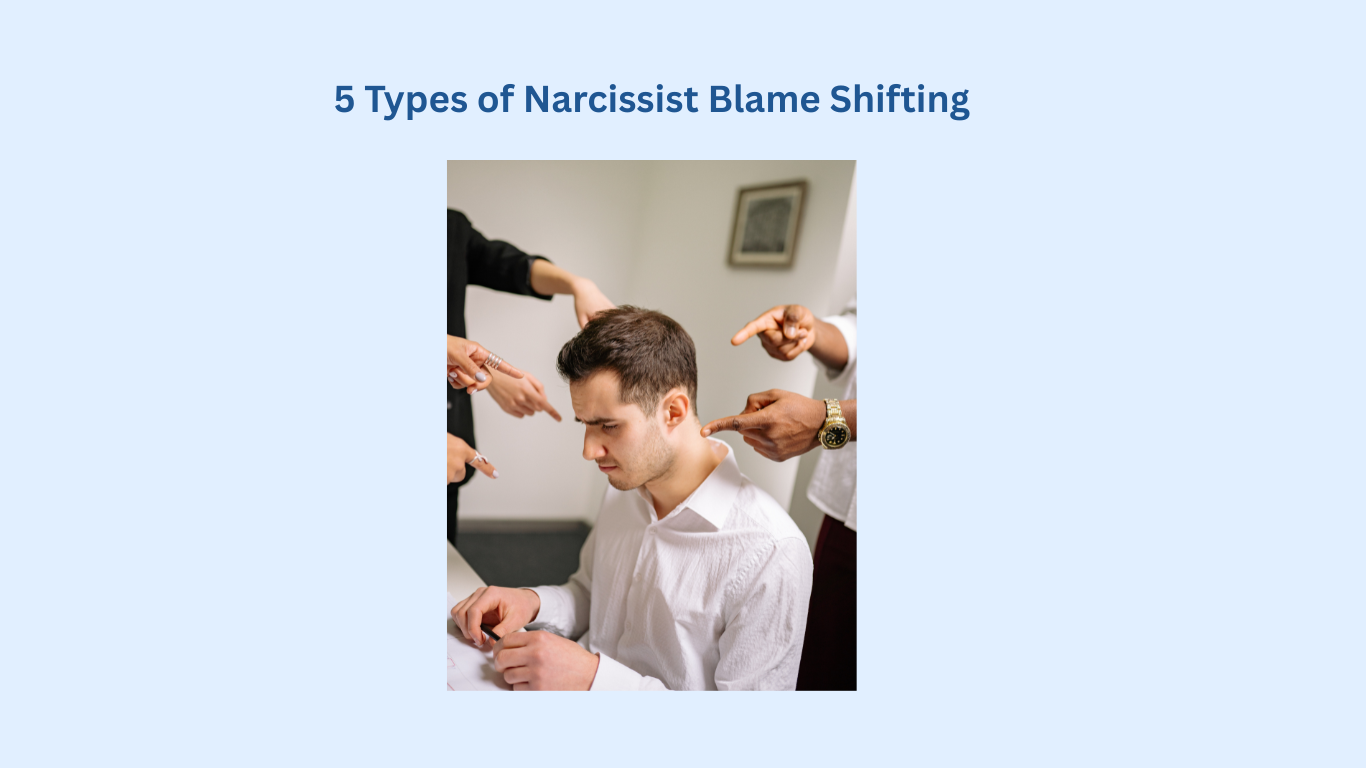
When you don’t understand narcissistic blame-shifting tactics, you end up stuck in cycles like:
- Over-explaining yourself
- Apologizing for things you didn’t do
- Feeling emotionally drained after every interaction
But once you recognize the types of narcissist blame shifting, you stop asking for fairness and start managing the situation to your advantage.
Let’s break down five of the most common tactics narcissists use to shift blame onto you.
1. Projection
In psychological terms, projection occurs when an individual cannot accept their undesirable traits or feelings, so they attribute (project) them onto someone else.
How does this look as narcissist blame shifting?
- If the narcissist is cheating, they will obsessively accuse you of infidelity
- If they are greedy, they will call you materialistic
- If they are lazy, they will rage at you for being unmotivated
Projection works because it puts you on the defensive while allowing the narcissist to avoid accountability entirely.
Suddenly, the conversation is no longer about their lie. It’s about defending your character. You spend the next hour trying to prove you aren’t a liar, completely forgetting that you originally caught them red-handed.
To handle it, don’t get pulled into proving your innocence. That’s the trap. Stay grounded in facts and avoid over-explaining yourself.
2. Gaslighting
While projection attacks your character, gaslighting attacks your sanity.
Gaslighting is a form of manipulation where the abuser sows seeds of doubt in the victim’s mind, making them question their memory, perception, and judgment.
When combined with narcissist blame shifting, they don’t just deny doing something wrong. They claim that your reaction to their wrong action is the real problem.
How it manifests:
- You ask, “Why did you insult me in front of our friends last night?”
- The Gaslighting shift: I didn’t mean to insult you. I was joking. Actually, your mood ruined the entire dinner.
Notice the movement of blame. The original issue was their cruel comment. After the gaslighting shift, the issue becomes your hypersensitivity and your mood.
So, you stop asking them to apologize for the insult and start worrying: Did I misinterpret what happened? Was I actually being too sensitive?
This is one of the most insidious types of narcissist blame shifting because it corrupts your trust in your mind over time.
To handle it, document habits if you can (mentally or physically), and anchor yourself in what you know to be true. External perspective from trusted people can also help restore clarity.
3. Victim reversal
The narcissist claims that they are the true victim in the situation. They portray your attempt to hold them accountable as an act of aggression against them.
You bring up something they did wrong, and suddenly, they are the one who has been hurt. They may cry, rage, or sulk.
For example, you call out their disrespect, they reply “I can’t believe you’re attacking me like this. You express pain, “after everything I’ve done for you, this is how you treat me?”
Now, instead of addressing the original issue, you’re comforting them. You find yourself saying, “I’m sorry, I didn’t mean to upset you.
Victim reversal is highly effective because it preys on your empathy. You don’t want to be a bully, so you back down, allowing the narcissist to escape consequence.
To handle it, do not abandon your original concern to soothe them. State your point calmly and refuse to accept the role of aggressor.
4. Deflection
Deflection is the art of changing the subject so rapidly.
Instead of directly denying or reversing blame, the narcissist changes the subject or introduces a new, unrelated complaint that demands immediate attention.
It sounds like this:
- This isn’t a big deal compared to…
- Remember last month when you…
You never get a resolution. Every conversation becomes a loop with no closure.
To handle it, gently but firmly steer back to the original issue. “We can discuss that later. Right now, I’m addressing [original topic].” If they refuse to engage, disengage.
5. Minimization
In this tactic, the narcissist admits that an event occurred (which feels like progress), but they minimize the impact of their behavior so that your reaction seems exaggerated.
By minimizing the severity of their action, they imply that your strong emotional reaction is the real problem.
They could say:
- It was just a joke. Can’t you take a joke?
- I hardly touched you. You are acting as if I beat you.
- It’s not that serious
They acknowledge just enough to appear reasonable, but not enough to take responsibility.
Yet, when you try to explain the pattern, the narcissist points to any single event and says, “See? You are hysterical over nothing.” At the end, they train you to suppress your emotions.
To handle it, name the minimization. “The size of the event doesn’t erase the impact.” Hold the line without escalating.
Conclusion
You cannot “win” an argument against a narcissist using their rules. Their goal is never resolution, accountability, or mutual understanding. It is an escape from responsibility, shame, and acknowledgement.
And their most effective weapon is your willingness to listen, self-reflect, empathize, and believe that people are acting in good faith.
Once you recognize the five types of narcissist blame shifting:
- Projection
- Gaslighting
- Victim reversal
- Deflection
- Minimization
You stop walking away from every conversation drained, confused, and somehow at fault.