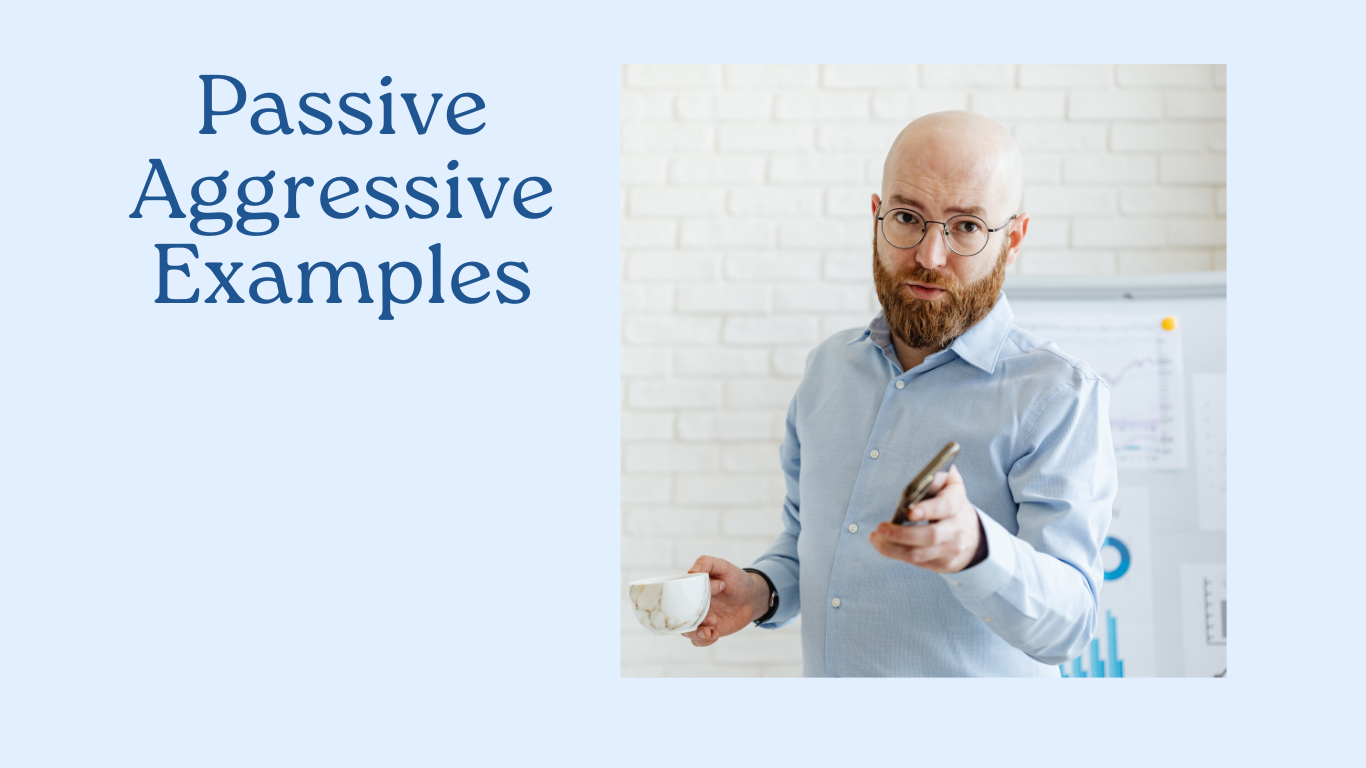
We’ve all experienced moments of passive aggression at some point.
Those subtle hints of indirect hostility can leave us feeling confused or second-guessing what just happened. Instead of addressing issues openly, people express their frustration through sarcasm, silent treatment, or backhanded comments.
The result is a breakdown in communication, strained relationships, and a lingering sense of tension that’s hard to name and resolve.
To better understand this behavior, I’d like to share some passive-aggressive examples across different contexts.
Let’s go!
Passive aggressive examples at work
Backhanded politeness
- No worries at all. I’ll just fix it myself, like I always do.
- Of course, you didn’t know. No one told you.
- Happy to help, even though I’m completely slammed.
Backhanded compliments
- That presentation was surprisingly good.
- I’m surprised you got that promotion.
- You’re smarter than you look in meetings.
- That report isn’t terrible for someone new.
Strategic forgetting
- Oh, I didn’t realize you needed that today.
- I must’ve missed that email.” (Repeatedly, and only with certain requests.)
- I thought someone else was handling it.
Delayed compliance
- Sure, I’ll get to it,” followed by unnecessary delays.
- Doing the bare minimum while insisting they followed instructions.
Weaponized helpfulness
- I guess I can do it since no one else seems capable.
- I’ll just handle it so it gets done right.
- I’m happy to help, even though my schedule is packed, unlike yours.
- “I fixed a few things. I hope you don’t mind.” (They didn’t ask.)
- Let me step in. You might not have the bandwidth for this.
Public agreement, private resistance
- Nodding in meetings, then criticizing decisions afterward.
- Saying “Sounds good” and then warning others that it won’t work.
- Undermining implementation while claiming alignment.
- Suddenly insisting on approvals that were never required before.
- “That’s not how we usually do it,” without offering alternatives.
The Silent treatment
- Short, clipped replies after a disagreement.
- Suddenly “too busy” to collaborate.
- Ignoring messages but staying visibly active.
- Withholding information, ignoring emails, or giving minimal, unhelpful responses.
Sarcasm as feedback
- Wow, bold choice.
- Guess we’re doing things differently now.
- Must be nice to have that much confidence.
Passive aggression examples in relationships
Partner and family
Guilt-laced comments
- Don’t worry about me, I’ll just spend the holiday alone.
- I guess we didn’t raise you to visit your old parents.
- Fine, go out with your friends. I’ll just sit here in the dark. It’s not like I was looking forward to spending time with you.
- I guess some things are just more important than family. Don’t rush, the dinner I made is probably cold and ruined anyway.
Comparisons and favoritism
- Your sister calls me every Sunday.
- I’m just saying, if you had a more stable job like your cousin, you could afford a safer car for the kids.
- I saw Mark helped his wife paint the entire living room. It must be nice to have a partner who’s so handy.
Gift-giving with strings attached
- Giving diet books, clothes in a smaller size, or a self-help book on a sensitive topic
Sabotaging through “kindness”
- To a child, after you’ve said no to sweets: “Oh, come on, Daddy, one extra piece of candy won’t hurt. We don’t have to tell Mom.
- An aunt/uncle to a teenager: “You don’t need your parents’ permission to get that tattoo. At your age, you know your own mind. I’ll even pay for it.”
The family gossip
- After a fight, your partner texts their sibling group chat: “She’s being completely unreasonable again and won’t talk to me. I don’t know how much more of this I can take,” to get them on their side before you’ve even had a chance to cool down.
- Your sister is upset you didn’t lend her money. Instead of talking to you, she calls your mother and other siblings, saying you’ve become “stingy and selfish since you got that fancy job,” turning the whole family against you.
- Your partner complains to their parents about a private financial decision you made together, framing it as your irresponsible idea. The parents then call you with “concerned advice.
Friend group
The vague social media post
- Posting lyrics or memes about betrayal, fake friends, or being left out aimed at the friend group without naming anyone.
- A group photo from an outing that clearly excluded one person, with a caption like “So grateful for my real ride-or-dies. Quality over quantity always.
- Sharing a graphic with a quote like,“ Sometimes God removes people to protect your peace.”
Planned exclusion
- “Oh my god, I thought I added you! It must have glitched.” after creating a group chat for plans with a name like “Beach Day!” that includes everyone but you.
- “A few of us are just doing a low-key thing, not a big deal…” Only for the excluded person to later see photos on Instagram of a full-blown, decorated party they weren’t invited to.
- “You wouldn’t have liked it” “We went to that new hardcore yoga class. We didn’t invite you because we know you’re not into that.” (Despite never asking).
“Just Joking!”
- Going for the ‘clown chic’ look? “Relax, it’s a joke! You used to have a sense of humor.”
- Another vacation? Must be nice to have a trust fund or just not care about savings, lol!” … “I’m just teasing! Don’t be so defensive.”
- Continually bringing up an old, embarrassing story (a failed date, a work blunder) at group gatherings. “Remember when you did that? God, we’ll never let you live that down!” When the person asks them to stop: “We’re just having fun. Don’t ruin the mood.”
Faint praise and competition
- You got the promotion? That’s amazing for someone at your level.
- Your new apartment is so cute and cozy! It’s like a little dollhouse compared to my place.
- “You cooked this entire meal? Wow. I would have just ordered catering. It’s surprisingly good!“
- You’re so brave for wearing that.”
Triangulation
- Don’t you think it was kind of selfish of Mark to leave the party early on your birthday?
- Can I tell you something in confidence? I’m just so hurt by Jamie. I know you’re close to her, but…”
- I need your advice. I think I really upset Liza, and I feel awful. What should I do?”
Body language clues
- Passive resistance: moving slowly, dragging feet, or “forgetting” to act when asked. The refusal is behavioral, not verbal.
- Micro-expressions: brief smirks, sneers, or one-sided mouth pulls that flash and disappear, revealing suppressed resentment.
- Exaggerated agreement: overly enthusiastic nods, dramatic thumbs-ups, or emphatic “okay” gestures that signal sarcasm.
- Anger through objects: slamming doors, shuffling items loudly, or putting things down with unnecessary force instead of using words.
- Delayed responses: long pauses, slow head nods, minimal replies, or heavy sighs that communicate resistance.
- Withdrawal: ghosting, delayed replies, or creating distance rather than addressing the issue directly.
Smart response scripts
Neutralize and clarify
- I might be missing something. Can you say that more directly?
- Can you help me understand what you’re concerned about?
- What part of this feels frustrating for you?
Acknowledge without accepting the insult
- I hear that you’re busy. Let’s focus on what needs to be done.
- Thanks for the feedback. Is there something specific you’d like changed?
- Noted. What would you suggest instead?
- This feels unproductive. What do you need right now?
Reflect the subtext back (gently)
- It sounds like there’s some frustration here.
- That came across a bit sharp. Was that your intention?
- Are you upset about how this was handled?
Set a calm boundary
- I’m open to feedback, but I need it to be direct.
- If there’s an issue, I’d rather address it openly.
- Let’s keep this constructive.
Reality check (calm and factual)
- Actually, the deadline was agreed on yesterday.
- For clarity, this was assigned to both of us.
- Just to correct the timeline…
Also, read: (3 Tips) How to Stop Being a Narcissist?




Pingback: “I Just Have a Temper”: Or Are These Signs of Anger Issues? - Vulnerable Narcissist
Pingback: 31 Things Narcissists Say in an Argument - Vulnerable Narcissist