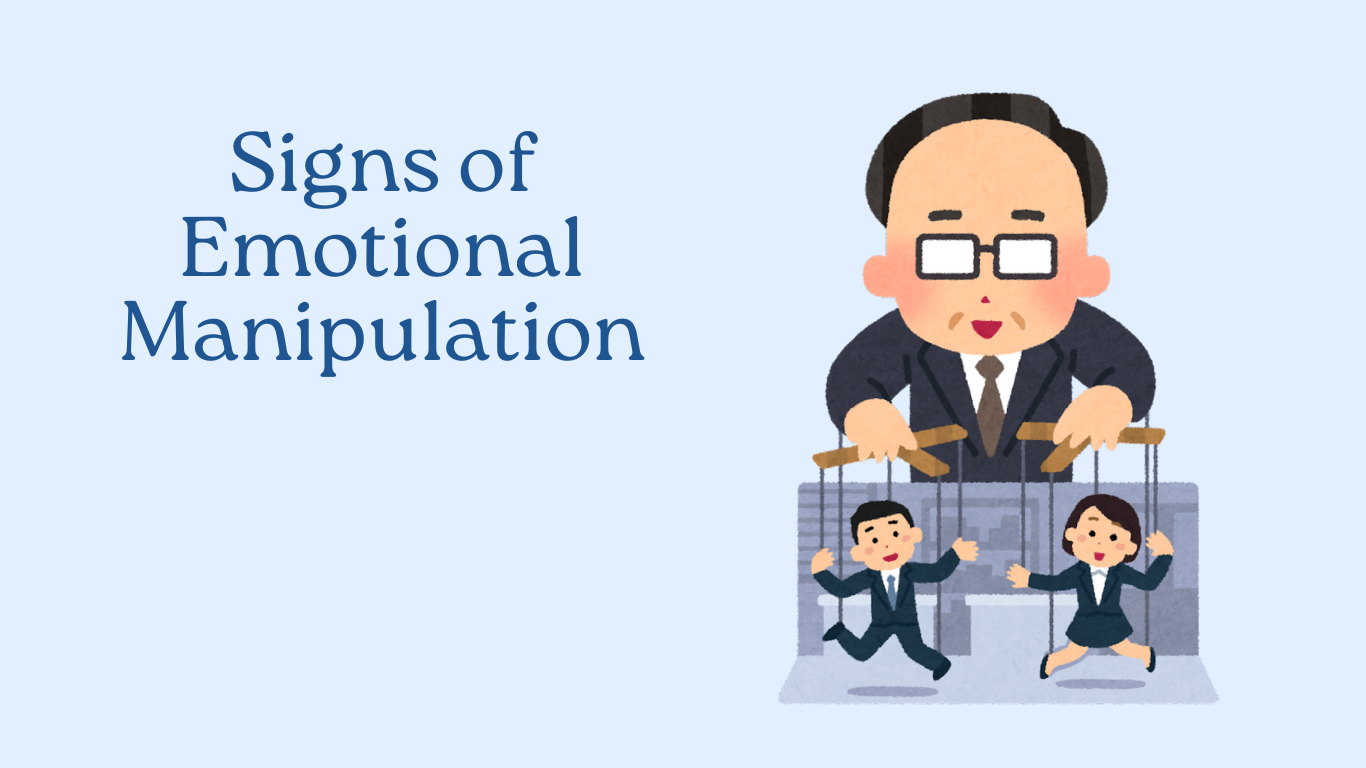
The hardest part about emotional manipulation is that it rarely looks obvious. It’s subtle, inconsistent, and leaves no clear proof behind.
And sometimes the clearest signs of emotional manipulation don’t come from analyzing the other person’s behavior. It comes from turning inward and noticing what happens inside of you.
Pay attention to how you feel, think, and react in their presence. Do you feel confused instead of clear? Drained instead of supported? Smaller, quieter, or more uncertain about yourself?
These feelings can be a sign that someone, perhaps a vulnerable narcissist, is trying to control you. What feels like normal relationship stress is actually a pattern of control, designed to keep you off balance.
In this article, we will focus on the signs of emotional manipulation that you can see in yourself, not on someone you think is manipulating you.
You always second-guess your decisions around them
In healthy relationships, uncertainty shows up occasionally and for clear reasons:
- When the risks are high
- When you lack information
- When you made a mistake
That kind of doubt is situational and specific. Manipulation, on the other hand, creates contextual doubt. You start questioning:
- your tone
- your intentions
- your memory of events
- whether your reactions are “too much.”
- whether you’re being unfair, dramatic, or unreasonable
The key signal: the doubt follows the person, not the situation.
But how does someone even get you to that point? What do they do to make you start doubting yourself?
An emotional manipulator relies on subtle tactics that don’t look aggressive on the surface:
- Inconsistent feedback: One day, you’re praised for a trait. The next day, that same trait is framed as a flaw. This trains you to hesitate before acting.
- Selective invalidation: Your feelings are acknowledged in theory but dismissed in practice (“I get why you’d feel that way, but…” repeatedly).
- Rewriting interactions: Past conversations are reframed so you’re unsure whether your interpretation was ever valid.
- Moving standards: Expectations change without being stated, so you’re always slightly “off.”
You might start thinking, “They probably know better,” even when your gut says otherwise.
As trust in your judgment weakens, you begin leaning on theirs for validation and direction. You may also start over-explaining your reasoning, deferring decisions, and prioritizing harmony over accuracy.
That dependence redirects the balance of power. As a result, they no longer need to demand your submission. They can gently guilt you into offering it, one compassionate concession at a time.
On edge, nervous, or panicking when they’re near
Your nervous system is designed to alert you to danger. In a healthy relationship with trust and safety, your body should be in a “rest and digest” state around the other person.
But if you’re consistently in a “fight, flight, or freeze” state (anxiety, panic, hypervigilance), your subconscious is recognizing a threat. This happens because you’re reacting to a pattern of unpredictable treatment, not a single event.
So, you feel on edge because you’ve learned you can’t predict their mood, their criticism, or their next guilt-trip.
Think about it: you are nervous because you are constantly:
- Monitoring their tone, facial expressions, and body language for signs of impending disapproval or anger.
- Filtering your words, opinions, and needs before speaking to avoid triggering them.
- Trying to pre-solve problems or manage their emotions to prevent an outburst.
It creates a state of chronic low-grade panic because you’re in a perpetual state of preparation for a potential emotional “attack.”
Your body is picking up on the subtle pressure that emotional manipulators create. It triggers instinctive responses like fear, stress, or doubt, which are much harder to resist or argue with, even if your conscious mind is making excuses for the person’s behavior.
Can’t seem to let go, even when you know it’s wrong
If you find yourself in a loop of “I know I should leave, but I can’t,” please don’t judge it as a personal failing. That feeling itself is an evidence of the manipulative system you’re trapped in.
So, how does that happen?
A huge part of it is that emotional manipulators exploit your best qualities:
- Your empathy is reframed as an obligation to tolerate harm.
- Your commitment is turned into a trap you’re morally pressured not to exit.
- Your self-doubt is amplified until your instincts feel unreliable.
So, you can’t let go because you’re fighting a war on two fronts: against their behavior and against your manipulated conscience.
On top of that, they bind you through intermittent reinforcement. It’s moments of warmth, validation, or remorse mixed unpredictably with withdrawal, criticism, or guilt.
That inconsistency trains your nervous system to stay on high alert, always waiting and working for the next “reward” of their approval to avoid the “punishment” of their disapproval. Your brain literally gets wired to chase the relief they control.
Also, emotional manipulation blurs cause and effect. You’re left questioning whether the problem is real, temporary, your fault, or fixable if you just try harder. That ambiguity keeps you psychologically invested. When certainty is removed, your brain keeps looping, searching for answers.
Finally, the entire narrative gets flipped. Manipulation reframes leaving as cruelty, abandonment, or failure on your part. You’re no longer choosing what’s healthy for you. You’re managing their emotions, their narrative, and the imagined fallout of asserting yourself.
That moral weight makes disengagement feel unsafe or selfish, even when staying is clearly harmful.
Feeling numb or like you’re losing yourself
That “I don’t feel like myself anymore” feeling is practical information. It means your inner life is being compressed to fit around someone else’s control.
What ends up happening is your mind starts running a cost-benefit analysis. You never know what reaction you’ll get, so staying emotionally open starts to feel risky. Naturally, your brain adapts: If being genuine leads to conflict or guilt, then being me isn’t safe.
To protect you from that feeling, you start to suppress your honest reactions, just to avoid the emotional damage. That creates a disconnect or a numbness. You’re still there, but in a way, you’re hiding.
On top of that, when you add in all that constant monitoring and walking on eggshells, you simply run out of energy for your own inner world. That numbness is fatigue.
Sometimes you’re holding two truths at once: “They care about me” and “Their behavior is hurting me.” And that tension is so unbearable, your mind sometimes just… checks out. In the end, that detachment is your psyche’s way of administering an emotional anesthetic.
Conclusion
Emotional manipulation doesn’t feel like control while it’s happening. Instead, it shows up as confusion, self-doubt, exhaustion, and a silent loss of your self.
That’s because emotional manipulation works like a slow-drip poison. You’re not suddenly doused with something you can easily identify and reject. You’re meticulously conditioned, one subtle moment at a time.
Over time, this slow drip corrupts your sense of reality. You begin to feel diminished, responsible for someone else’s emotions, and unsure of your perceptions despite your best efforts. When that happens, you are simply being manipulated.
So, take these experiences seriously. They are strong signs of emotional manipulation. And your role is not to justify or explain them away, but to recognize them and protect yourself accordingly.
And remember: your feelings are valid, your boundaries are non-negotiable, and your reality deserves to stand unchallenged.




Pingback: How Vulnerable Narcissists Use Guilt-Tripping Instead of Open Control - Vulnerable Narcissist