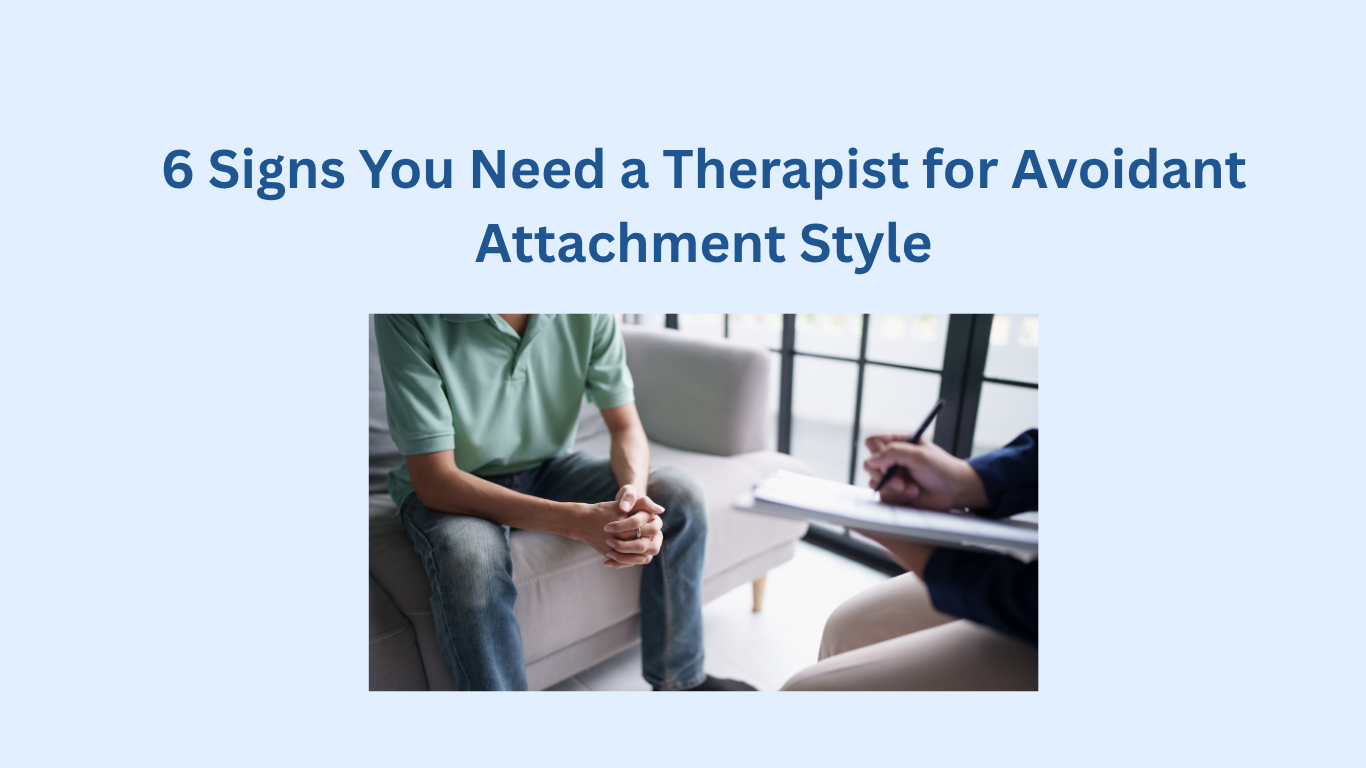
When to seek a therapist for avoidant attachment style?
You’ve tried self-help, followed the TikTok accounts, and maybe even highlighted half a chapter on avoidant attachment. You can walk someone through your childhood like it’s a timeline, name every coping mechanism you’ve developed, and map out your relationship patterns with stunning clarity.
And now… are you better? Are you actually feeling different, or just thinking about it more?
Sometimes, what you really need isn’t more insight. You require a therapist for avoidant attachment style who can co-regulate with you, notice the signals your body is sending, and gently challenge the independence that’s been your defense for so long.
So, here are six clear signs that self-help has reached its limit, and that finding a therapist for avoidant attachment style is the next right step.
1. You feel worse or more numb after several weeks of self-help efforts
For many avoidant attached individuals, self-help can unintentionally become another form of avoidance.
You may find yourself staying in your head rather than engaging with your emotions. You may intellectualize your feelings (“I understand why I do this, so I should be fine now”) rather than actually feeling them.
Or you might rigidly follow self-help exercises, only to notice a growing sense of numbness or emptiness.
A therapist for avoidant attachment style can gently provide the co-regulation (safe, attuned presence) you never learned to internalize.
They’ll also notice when you’re “doing therapy” as another performance of independence, and help you recognize that true healing requires leaning on another person.
2. Your body reacts before your mind does
You notice tension, headaches, fatigue, or a tight chest in relationships. Your body also pulls you away from people (e.g., suddenly feeling sleepy, distracted, or needing to leave) before your mind registers any discomfort.
This mind-body disconnect is common among people with an avoidant attachment style.
A therapist can help you track bodily signals and reconnect physical sensations to emotions, bypassing the intellectual defenses that keep you stuck.
3. You end relationships when closeness increases
A clear red flag: every time a relationship moves toward real intimacy. For example, after a vulnerable conversation, a vacation together, meeting family, or saying “I love you,” you find a reason to leave.
You may also feel suffocated, bored, or suddenly certain that the person is wrong for you. This is a programmed flight response.
A therapist for avoidant attachment style can help you tolerate closeness without fleeing, so you don’t keep losing people you truly care about.
4. You have experienced extreme trauma or emotional neglect in childhood
Childhood neglect (e.g., parents who were absent, dismissive, or overly critical) underlies avoidant attachment. You learned early that showing emotion was unsafe or pointless.
If you also experienced physical, emotional, or sexual abuse, self-help is insufficient. You need trauma to be treated by a trained professional.
A trauma-informed therapist can help you process memories without overwhelming your nervous system and rebuild trust in relationships.
5. Avoidance impacts personal growth or career
You turn down promotions that require collaboration, avoid mentorship because it feels like dependence, or isolate yourself when work gets stressful. You may also excel in solitary tasks but crumble under team pressure.
Avoidance can also block creative expression, learning, or asking for help.
If your self-protective distance is destroying your life instead of protecting it, therapy can help you risk connection for the sake of growth.
6. Chronic emotional distancing
You feel little to nothing in situations that typically evoke strong feelings in others (births, deaths, weddings, reunions).
These moments might leave you feeling flat, detached, or like you’re observing rather than participating. You might prefer solitude and tell yourself you’re simply “not that emotional” or “better off alone.”
A therapist for avoidant attachment style can help you learn when to lean in and when to give yourself space, giving you more choice in how you relate to both yourself and others.
Conclusion
Avoidant attachment is an adaptation to an emotionally unsafe childhood. It allowed you to survive by minimizing need, staying self-sufficient, and keeping others at arm’s length.
But the same strategies that protected you now prevent you from experiencing the depth of connection, joy, and support that most humans crave.
Seeking a therapist for avoidant attachment style offers a slow, respectful, relational space where, for perhaps the first time, it feels safe enough to let someone in.