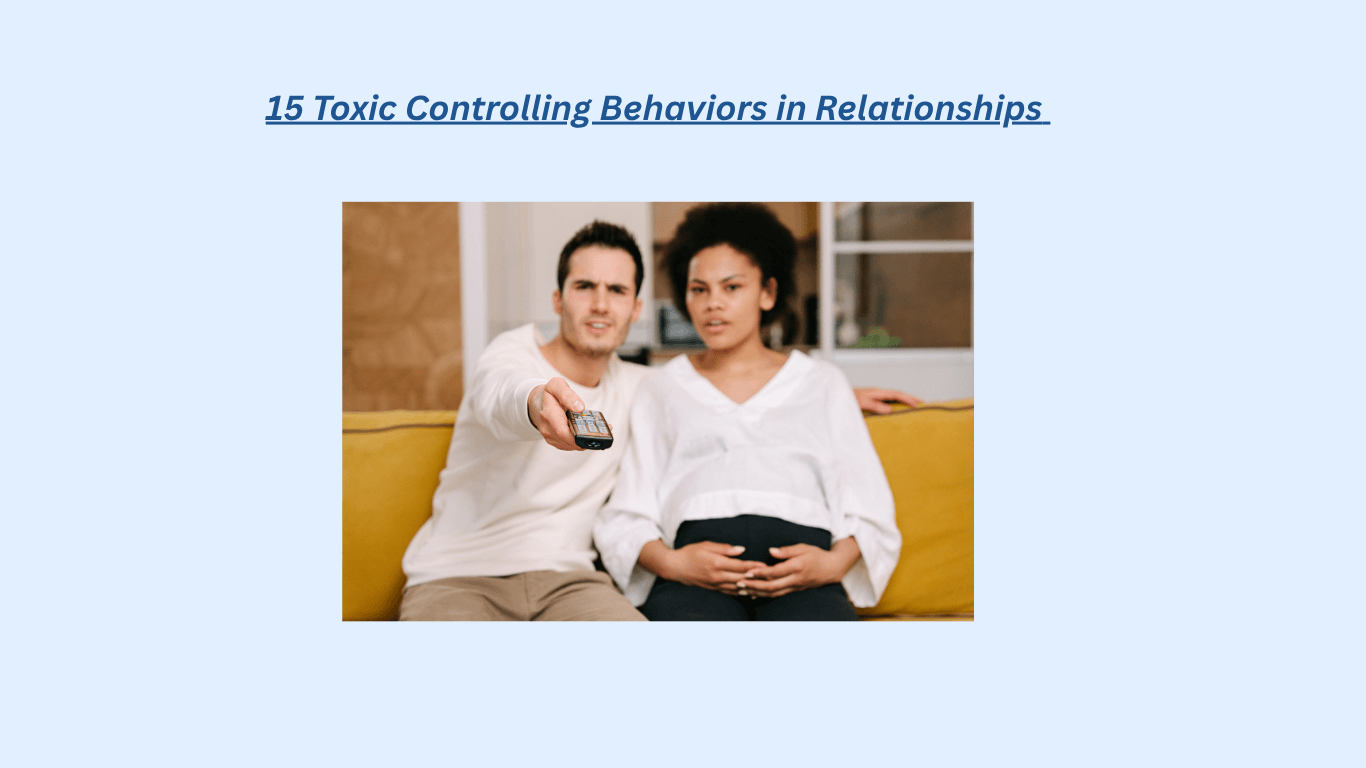
Controlling behaviors in relationships are a form of emotional abuse.
A healthy relationship allows you to be yourself. It gives you the freedom to make your decisions, maintain your independence, and express your thoughts without fear of criticism, punishment, or intimidation.
Your partner doesn’t have to agree with everything you say or do, but they should always respect your right to your opinions and choices.
A controlling relationship, on the other hand, works in the opposite direction. It chips away at that freedom under the illusion of protection, love, or care.
So, the sooner you can name controlling behaviors in relationships, the sooner you can protect your emotional well-being and decide what’s best for you.
Here are 15 controlling behaviors in relationships that may signal an unhealthy or abusive partnership.
1. Demanding access to your phone, email, or social media passwords
Some controlling partners claim that if you have nothing to hide, you should willingly hand over access to your devices and accounts.
This demand is a classic example of controlling behaviors in relationships. It violates your privacy and forces you to prove your innocence constantly.
Also, giving in to these demands rarely ends the problem. Instead, it leads to increased monitoring of conversations, social media activity, and personal emails. The expectation of complete access can grow into constant inspections and accusations.
2. Dictating what you wear, eat, or how you style your hair
Your appearance and personal choices belong to you. A healthy partner may have opinions or preferences, but they should never dictate how you dress, style your hair, wear makeup, or manage your body and diet.
And yet, the control starts small. They may repeatedly criticize your outfits until you stop wearing them, insist that certain clothes are “inappropriate,” discourage hairstyles they dislike, or pressure you to lose or gain weight.
These demands are frequently disguised as concern, advice, or a desire to “help you look your best,” making the control harder to spot.
In reality, the goal is to keep your focus fixed on pleasing them, until your self-worth depends entirely on their approval.
Remember, a respectful partner understands that your body and appearance are yours to decide. They may express a preference, but they respect your choices and never make their love, acceptance, or respect conditional on changing who you are.
3. Requiring permission for everyday activities
No adult should have to ask permission to meet a friend for coffee, go to the grocery store, attend a doctor’s appointment, or simply take time for a hobby.
In a controlling relationship, however, even these basic activities require approval.
This creates a hierarchy where your partner becomes the authority and you become the subordinate.
Every small decision turns into a negotiation. You find yourself justifying where you’re going, defending why it matters, and proving that your reasons are “valid enough.”
Over time, this becomes exhausting and isolating. If every outing requires permission, you may stop asking altogether, and slowly, without a single fight, the abuser achieves complete control on you.
4. Making decisions for you without your input
Decisions that affect both partners require discussion. And decisions that influence you alone require your vote.
When your partner makes choices about your housing, career, or schedule without consulting you, they are practicing controlling behaviors in relationships that make your life irrelevant.
They may claim they know what’s best, but in reality, they are taking control of your life’s narrative, leaving you passive and dependent.
5. Discouraging your education or career
Education and career are paths to independence, financial security, and self-fulfillment.
That’s why controlling partners see those things as threats because they make it easier for you to escape.
They may argue that your education takes too much time, claim your job is hurting the relationship, or pressure you to quit working altogether.
Their goal is to make you dependent and keep you under their control. If you have no career, you have no options.
6. Monitoring your location
Some controlling partners expect to know where you are at every moment.
They may repeatedly check your location, question every stop you make, or become angry if your location services are turned off.
This constant surveillance forces you to account for your every move, making you hypervigilant and afraid to deviate from expected routines.
7. Excessive jealousy or possessiveness
Jealousy and possessiveness are expressions of insecurity and control. They place the burden of your partner’s emotions squarely on you.
Excessive jealousy manifests as accusations, interrogations, and suspicion. You are constantly defending your faithfulness, proving your commitment. But it’s never sufficient.
Possessiveness goes further, treating you as property. Your time, attention, and relationships belong to them, leaving no room for you to exist as a separate person.
In practice, a possessive partner may become upset whenever you spend time with family, coworkers, or friends. They may expect to be your only source of emotional support and grow resentful whenever your attention is directed elsewhere.
8. Accusing you of cheating without reason
A controlling partner may constantly question where you’ve been, who you spoke with, or why someone liked your social media post.
They twist these ordinary interactions into evidence of infidelity, turning your daily life into a case where you’re always the defendant.
This tactic is one of the most manipulative, controlling behaviors in relationships. It distracts from their behavior, forces you to expend emotional energy defending yourself, and creates an atmosphere of distrust.
It also allows the abuser to claim victimhood, and the accusations will continue regardless of your actions.
9. Using guilt to influence your choices
Controlling partners use guilt to shape your behavior.
They paint your choices as betrayals and your independence as selfishness.
They may list everything they have done for you, highlight your obligations, and emphasize your responsibilities to the relationship to make you feel that asserting your needs is a form of ingratitude.
10. Threatening to leave if you don’t comply
The threat of abandonment is a control tactic. It leverages your commitment to the relationship, using fear to pressure you into submission.
11. Demanding immediate responses to calls or texts
Everyone has responsibilities outside their relationship. Work, school, driving, family obligations, exercise, and personal time all affect when someone can respond.
A controlling partner may expect replies within minutes and become angry if they don’t receive them.
They may send repeated messages, call multiple times, or accuse you of ignoring them, creating a constant state of anxiety around your phone.
12. Preventing you from seeing certain people
A controlling partner may discourage or forbid contact with friends, family members, coworkers, or anyone who supports you. They see these people as threats because they offer perspective and perspective threatens control.
They may create conflicts that coincide with planned visits, make you feel guilty for prioritizing other relationships, or start arguments right before you leave.
The goal is to cut you off from your support systems, leaving you alone with no one to tell you what’s right.
13. Punishing you for setting boundaries
Boundaries are healthy expectations that protect your emotional, physical, and mental well-being.
A controlling partner may respond negatively when you set one.
They could give you the silent treatment, withdraw affection, becoming angry, insult you, or accuse you of being selfish for asking for basic respect.
As a result, this conditioning teaches you that asserting your needs comes at a cost. You learn to stay quiet, keep the peace, and suppress your boundaries.
14. Constantly criticizing or belittling you in private or public
A controlling partner may regularly insult your intelligence, appearance, personality, career, parenting, or abilities.
They may embarrass you in front of others through jokes, sarcasm, or public humiliation. The goal is to make you feel small. If you feel small, you cannot resist, and you may come to believe you require them.
15. Hiding or destroying your personal belongings
A controlling partner may hide your keys to prevent you from leaving, throw away personal items during arguments, damage your phone, or destroy sentimental possessions.
These are attempts to limit your independence or punish you for asserting it.
Conclusion
These 15 controlling behaviors in relationships are serious red flags that should never be ignored.
And they rarely appear all at once. Instead, they develop gradually through repeated demands, emotional pressure, and increasing restrictions on your independence.
What begins as frequent check-ins, password requests, or jealousy can become a pattern that limits your choices, isolates you from others, and undermines your confidence.
So, if multiple controlling behaviors in relationships on this list are present in your relationship, it may be time to evaluate whether you should stay or leave.





Pingback: What Are Red Flags In a Relationship? A Complete Guide to 16 Toxic Behaviors
Pingback: 13 Body Language Signs of a Covert Narcissist That Are Quietly Toxic