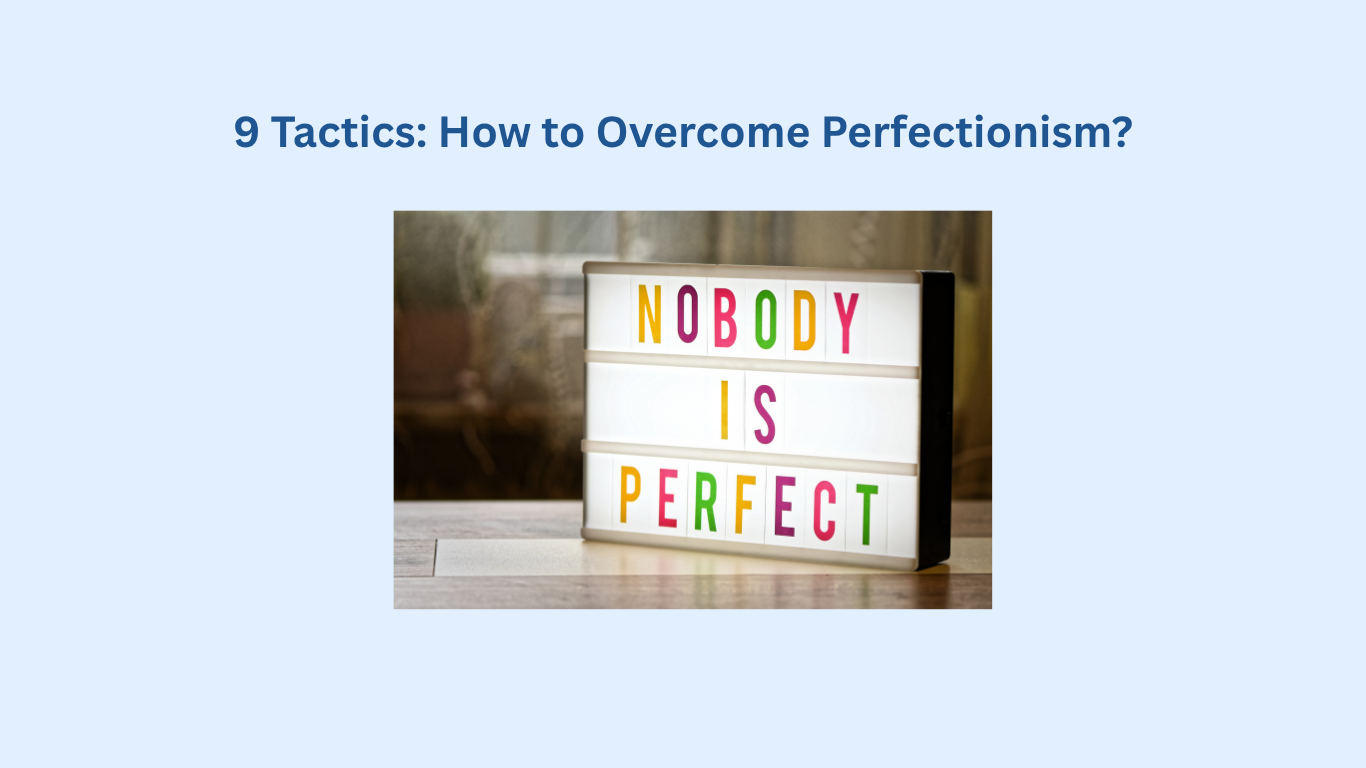
Looking for how to overcome perfectionism?
You’ve probably heard this before: perfect is the enemy of done.
Perfectionism sounds great in theory. It promises high standards, amazing results, but in reality, it just leads to procrastination, second-guessing yourself, and a bunch of half-finished projects.
So if you are looking to learn how to overcome perfectionism to change the impossible goal of ‘zero mistakes’ for the achievable goal of ‘real progress,’ these 8 tactics will show you how.
Why does it harm you?
Perfectionism takes more than it gives.
It traps you in an all-or-nothing mindset where anything less than flawless feels like total failure.
This leads to depression, anxiety, and burnout.
At the same time, it stops you from growing. Instead of motivating healthy progress, perfectionism paralyzes you with the fear of starting and then punishes you for every mistake.
So you delay, overthink, and drain your energy before you’ve even begun.
Also, treating every mistake as a judgment instead of feedback turns your inner voice into a critic that destroys your self-esteem, damages your relationships, and kills creativity.
In the end, you stop enjoying progress, stop learning openly, and “good enough” always feels just out of reach.
How to overcome perfectionism?
Sometimes, even when you know better, you find yourself stuck searching for the “perfect” option, the perfect word, the perfect moment, and the perfect decision. You realize it’s unrealistic, yet the habit pulls you back.
To break the cycle and finally move forward, here is how to overcome perfectionism using these 8 tactics.
1. Redefine “good enough.”
Redefining “good enough” means meeting the essential requirements without unnecessary excess.
For example, a work email is “good enough” when it’s clear, polite, and actionable. It doesn’t need to have the best subject line or the most clever turn of phrase.
So, before you start, decide what “done” means in the simplest terms. Ask yourself:
- What does a completed version look like?
- What are the minimum requirements for this to be useful?
Then, set clear limits (time, length, scope), focus on function over polish, and decide your stopping point in advance.
2. Use the 85% rule
The idea is simple: once something is about 85% complete, it’s usually already doing its job. The remaining 15% is where perfectionism hides (tiny tweaks, overthinking, and diminishing returns).
In practice, ask yourself: If I stop now, will this still meet the essential requirements? If yes, you’re done. If no, identify the one or two small tweaks to reach “good enough,” then stop. That’s how to overcome perfectionism without sacrificing results.
3. Spot your perfectionism triggers
Pay attention to when perfectionism shows up. Is it when you’re being watched? When starting something new? When the stakes feel high? Or, when you’re comparing yourself to others? Keep a small log for a week.
Each time you over-edit, restart, or delay starting, note what triggered it. Once you name your triggers, you create space to act differently.
Instead of defaulting to perfectionist habits, decide your response in advance. For example, if you notice yourself over-editing, stop at one intentional pass and hit send.
4. Reframe failure as growth
Perfectionism treats mistakes as proof that you’re not good enough. So, change your inner dialogue from “I messed up” to “I learned something.”
To make this stick, try setting a “mistake quota” each week. Aim for small, recoverable errors as proof you’re stretching beyond your comfort zone.
5. Learn how to forgive yourself
Perfectionists hold onto undesirable qualities longer than necessary. You replay them, overanalyze them, and use them as evidence against yourself.
So, next time, notice the flaw without turning it into a story about your competence. Then, extract the lesson and move on deliberately.
Also, try once a week to schedule small, controlled imperfections (Send something at 90% instead of 100%, stop editing after one pass). Then, forgive yourself right after.
This trains your brain that mistakes are neutral events and forgettable.
6. Challenge all-or-nothing thinking
Perfectionism loves words like never, always, total, disaster, and flawless.
So, when you notice yourself thinking in absolutes, pause and reconsider them. Instead of “This is ruined,” try “This has one weak spot.”
Use a 0–10 scale: if 10 is perfect, ask whether a 7 or 8 still holds value. Most of the time, it does. Also, no one else can tell the difference.
7. Focus on output, not identity
Perfectionism ties your work to your self-worth. So every task feels like a test of who you are, not just what you’re doing.
To break that loop, separate the two. Start by calling your project “the thing I’m making” instead of “my masterpiece.”
Then, track volume (how many things you complete) instead of obsessing over quality. And when you catch yourself overthinking, redirect your language from “Is this good?” to “Is this useful?”.
This brings the work back in purpose instead of identity.
8. Practice self-compassion
If your inner voice is harsh, you’ll avoid effort to avoid criticism. But if it’s supportive, you’ll take more risks and recover faster.
Talk to yourself like you’d talk to a friend you love. When you feel the urge to criticize, pause and ask: Would I say this to someone I actually like? Then soften the tone. Instead of “You’re so behind,” try “This is hard, and you’re trying.”
Self-compassion will help remove unnecessary pressure.
9. Address root causes
Perfectionism is rarely just about standards. It’s driven by deeper things:
- Childhood trauma
- Fear of judgment
- Fear of rejection
- Need for control
- Low self-worth tied to performance
If you ignore these, the habit keeps coming back.
So ask yourself honestly:
- What am I afraid will happen if this isn’t perfect?
When you name the fear, it becomes easier to challenge and smaller than it felt before.
Conclusion
Perfectionism promises safety but delivers paralysis. It creates the illusion that if you wait long enough, work hard enough, and control every detail, you can avoid mistakes altogether. But in reality, that pursuit keeps you stuck at the starting line.
Learning how to overcome perfectionism means cultivating courage, choosing action over inaction, progress over precision, and self-compassion over self-criticism.





Pingback: How to Stop Overthinking In a Relationship? (12 Tips)