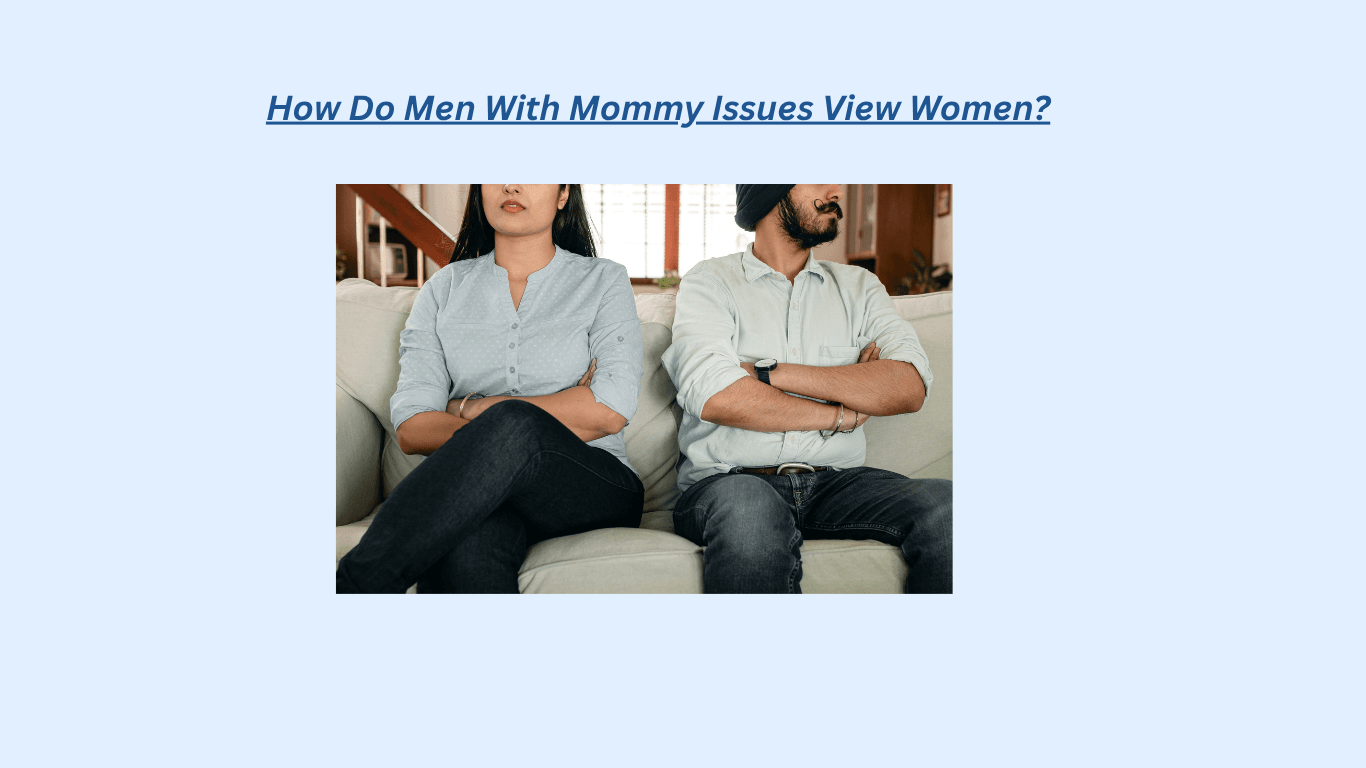
Men with mommy issues view women less for who they are and more for who they need their mother to be.
As a result, they may project childhood needs, fears, and unresolved wounds onto their romantic partners.
These projections show up as unrealistic expectations she can never meet, emotional reactions that are “too big” for the situation, and habits of idealization followed by sudden devaluation.
To help you understand the why and how, here are 15 ways men with mommy issues view women.
1. As saviors or villains
Men with mommy issues subconsciously learned that women are either all-good or all-bad. There is no middle ground.
So, he projects an image of purity and salvation onto women. He believes that if he can just secure this “angel,” she will fix all his broken parts. This is the “savior” narrative.
Conversely, he can quickly pivot to viewing women as commodities, enemies, or inherently manipulative, based on the subconscious blueprint he was given.
And he switches between these two extremes depending on his current mood.
2. As someone who should manage his life
If his mother was overbearing, he learned that women are responsible for his schedule, emotions, and well-being.
So, he expects a woman to take over the role his mother played. He wants her to handle the bills, remind him of responsibilities, and manage the household mental load.
3. As transactional or untrustworthy
If a man experienced emotional neglect, manipulation, or inconsistent affection from his mother, he may grow up believing women have always hidden motives. He may assume kindness comes with strings attached or that women cannot be trusted.
Every gesture becomes a negotiation. And every act of love becomes a potential trap.
4. As someone whose love must be earned
Many men with mommy issues believe that love is a reward for good behavior.
If he acts correctly, provides enough, or performs well, he is “allowed” to receive affection. So he becomes a people-pleaser, overextending himself to secure that reward. He buys the gifts, fixes the car, and pays the bills, all to prove his worth.
At the same time, he may avoid emotional vulnerability because, in his mind, love is practical and tangible.
When the relationship begins to struggle, he feels cheated. He says, “I did everything for her, and she still left.”
5. As mirrors of his mother’s flaws
We are drawn to the familiar, even if the familiar is toxic.
A man who grew up with emotional distance, criticism, unpredictability, or instability may find himself repeatedly attracted to women who display similar traits.
He does this because he is trying to “fix” the original injury. When the new partner inevitably acts like the old mother, he falls into the same habits of disappointment, anger, and withdrawal.
6. As emotionally safe only from a distance
If expressing feelings was discouraged or ignored during childhood, men with mommy issues may learn to suppress emotions altogether.
As an adult, he may avoid vulnerability, shut down during conflict, struggle to communicate emotions, or withdraw when relationships become emotionally intimate.
So, he ends up viewing women as people he wants to be close to but can’t risk being close to.
7. As sources of constant validation
He needs to be told he is handsome, smart, and good enough. However, this validation is never enough. He consumes it like a drug, requiring higher and higher doses.
As a result, this can lead to flirtatious behavior, attention-seeking, serial dating, or a constant need for reassurance from romantic partners.
8. As people who will abandon him
His life is run by the fear of being left. He becomes clingy, jealous, and overly dependent on reassurance that his partner is not going to leave.
Because he anticipates rejection, he begins testing the relationship. He may push his partner away, create unnecessary conflict, or withdraw emotionally to see whether they will come back.
If they return, they temporarily reassure him that he is loved. But the relief never lasts, and the cycle begins again.
In the process, he sabotages the very relationships he wants to preserve. If his partner leaves, it confirms his fear. The fear that he is fundamentally unlovable and destined to be abandoned.
9. As perfect
At the beginning of a relationship, men with mommy issues may view a woman as perfect, special, and unlike anyone else.
However, once they discover normal human flaws, their admiration quickly turns into criticism, resentment, or emotional withdrawal.
10. As threats when they offer criticism
Criticism from a woman feels like a physical blow. He cannot separate feedback about his actions from a perceived assault on his entire existence. This makes him defensive, argumentative, and impossible to offer constructive feedback.
A simple suggestion about a chore can spiral into a massive argument about “respect,” as he conflates guidance with maternal control.
11. As unreasonably demanding
If healthy emotional communication was never learned during childhood, skills such as listening, apologizing, expressing feelings, or providing emotional support may feel unfamiliar and difficult.
As a result, he views basic emotional effort as exceptional, and he resents women for expecting more than he thinks he’s capable of giving.
Furthermore, he may expect significant praise for behaviors that are considered normal in healthy relationships.
12. As threats when they are successful
He needs his partner to be slightly broken or at least dependent.
A woman who is too strong exposes his inadequacy. He may try to undermine an independent woman, belittle her achievements, or grow cold when she succeeds.
He would rather see her small so he can feel big than risk being left behind. Her success feels like his failure.
13. As possessions to own
He views his partner as an object to be owned and other men as threats to his “property.”
So, he may monitor your activities, question friendships, or become suspicious without evidence.
He wants you to be all his, to have eyes only for him, and to never leave. Yet, he keeps an emotional distance.
But once he feels safe, he takes you for granted. There is a way to make sure you aren’t abandoning him.
14. As either absorbed or rejected
He either has walls so high that you can’t get in or he has no walls at all and expects you to be merged with him entirely.
And he doesn’t understand that two people can be independent and in love at the same time.
He sees distance as rejection and intimacy as absorption. There is no in-between. You are either everything or nothing, and he can’t hold the middle ground.
Conclusion
The way men with mommy issues view women reveals their unresolved childhood experiences rather than present-day reality.
This can lead to behaviors such as idealizing women, seeking constant validation, fearing abandonment, struggling with trust, or expecting a partner to fill roles that no romantic relationship can realistically fulfill.
For women, it is important to remember that you cannot heal a man’s childhood wounds for him. You can offer support, empathy, and encouragement, but it is not your responsibility to become his therapist, parent, or emotional caretaker.
Pay attention to whether he is taking responsibility for his growth. A healthy relationship requires two adults relating as equals, not one person trying to repair the other’s past.