Do you apologize when someone hurts your feelings?
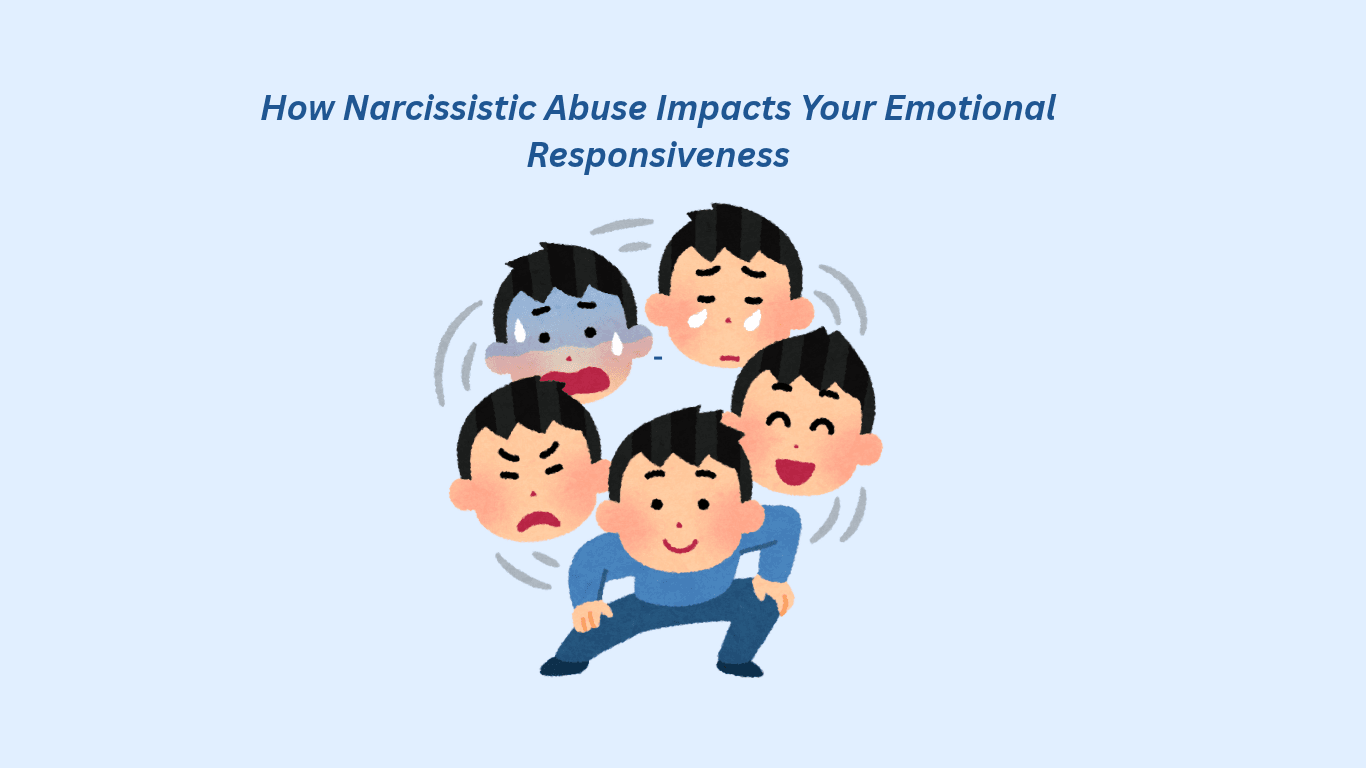
That’s one way narcissistic abuse messes with your emotional responsiveness. It changes how you feel, how you show feelings, and how you react to other people’s feelings.
The changes are subtle, but they can stick around long after the abuse ends.
So, here are 10 ways it can impact your emotional responsiveness and what you can do about each one.
1. You automatically minimize your emotions
You may automatically downplay your feelings before anyone else has a chance to. You might catch yourself saying things like:
- It’s not that serious.
- I shouldn’t be upset about this.
- Other people have bigger problems.
- Maybe I’m just too sensitive.
- I should just let it go.
This is a learned reflex. You were repeatedly told your feelings were too much, wrong, or inconvenient, so your emotional responsiveness adapted.
You become so used to having your emotions dismissed that you start doing it yourself, even when no one else is around.
How to change this: Stop arguing yourself out of your feelings. When something upsets you, resist the urge to immediately explain it away or convince yourself that it isn’t important.
Identify what you’re feeling, consider what triggered it, and ask yourself what you need. Remember, you don’t have to prove that your feelings are justified before taking them seriously.
2. You struggle to self-validate
You can comfort a friend for hours, but when it comes to your feelings, you struggle to tell yourself that what you’re experiencing is reasonable.
For example, you might feel hurt by someone’s comment but hesitate to acknowledge it until a friend confirms that it was inappropriate. You may also replay conversations, looking for evidence that you had a valid reason to be upset.
This can happen after repeated emotional invalidation.
Instead of discussing disagreements respectfully, a narcissistic person may tell you that you’re imagining things, misinterpreting their intentions, or creating problems.
Over time, you start doubting your perceptions and treating other people’s opinions as more reliable than your own.
How to change this: Treat your initial reaction as information. When something feels off, write down what happened and how you felt before seeking someone else’s opinion. Later, notice whether their perspective confirms what you already sensed. Also, learn to consider other viewpoints without automatically dismissing your own.
3. You become hyper-attuned to others’ emotions
You may pay more attention to other people’s emotions than your own. You notice changes in their tone, facial expressions, and behavior, before they say anything.
This hypervigilance developed as a way to protect yourself. You learned to anticipate other people’s moods to recognize potential problems and avoid conflict.
As a result, you might change the subject when someone looks annoyed, apologize when they seem disappointed, or cancel your plans because someone needs your attention.
You may also feel responsible for managing everyone’s emotions when you’ve done nothing wrong.
How to change this: Stop treating every change in someone’s mood as a problem you need to solve. Remind yourself that other people are responsible for managing their emotions. And pay more attention to your feelings and needs instead of constantly adjusting to everyone else’s.
4. You struggle to identify what you’re feeling
Many survivors of narcissistic abuse lose the vocabulary for their emotions.
You become disconnected from your emotional experiences. You might feel something physical like tight chest, clenched jaw without knowing what emotion is behind it.
This happens when expressing emotions repeatedly leads to criticism or conflict. You learned to suppress your reactions instead of examining them. So the signal gets buried.
For example, someone makes an inappropriate comment, but you can’t tell whether you’re angry or embarrassed. Or a situation hurts you, and you only realize it hours or days later.
How to change this: Slow down and name what you’re feeling. Ask yourself whether you are angry, sad, disappointed, anxious, embarrassed, or afraid. Then, write down what happened and how you reacted so you can spot patterns.
5. You feel guilty for basic needs
Even when you’re alone, you may feel guilty for wanting rest, comfort, or attention.
Around other people, you might worry that you’re being demanding. You may apologize before explaining what you need or convince yourself that it’s easier to handle everything alone.
This response can develop when the narcissist treated your needs as inconvenient. They may accuse you of being selfish when you ask for support, become irritated when you express dissatisfaction, or make you feel responsible for their problems.
Someday, you learn to hide your needs to avoid criticism or disappointing others.
How to change this: Stop treating your needs as a burden. Practice asking for help, expressing your preferences, and taking time to rest without feeling guilty. You don’t have to apologize for having needs or justify every request you make.
6. Your emotions may arrive late or all at once
During an argument, you might remain calm, agree with the other person, or struggle to respond. Later, when you’re alone, you suddenly feel angry, hurt, or overwhelmed.
In other situations, your emotions may build up until a small incident triggers a much stronger reaction than you expected.
This slow response can develop when expressing your feelings leads to hostility, criticism, or punishment.
You learn to suppress your immediate reactions to get through difficult interactions, sometimes without realizing how much they affect you.
How to change this: Give yourself time to process difficult interactions instead of forcing yourself to move on. If anger or disappointment surfaces later, acknowledge it rather than criticizing yourself for not reacting sooner.
7. You overreact to small transformations
You may react strongly to small changes in someone’s behavior when there’s no clear reason to worry.
For example, your partner takes longer than usual to respond to a message, and you immediately wonder whether they’re angry. A friend sounds less enthusiastic than usual, and you worry that you’ve upset them. Someone cancels plans, and you struggle to stop thinking about what it means.
This happens because you learned to watch for these changes. Around the narcissist, you never knew when their behavior would turn against you.
How to change this: Consider other explanations instead of immediately assuming something is wrong. Remind yourself that other people’s moods and temporary changes in behavior don’t automatically mean you’ve done something wrong.
8. You doubt a caring gesture
You may struggle to accept kindness without questioning the person’s intentions. When someone compliments you, offers help, or shows affection, you might wonder what they want in return.
You may also feel uncomfortable receiving support or expect the gesture to be used against you later.
This response develops when kindness in a narcissistic relationship is conditional. Maybe affection came with strings attached, or you experienced periods of warmth followed by criticism, withdrawal, or mistreatment. That inconsistency makes positive interactions hard to trust.
How to change this: Let people show their intentions through consistent behavior. You don’t have to trust someone immediately or ignore warning signs. Watch whether their actions match their words and whether they respect your boundaries. Healthy kindness doesn’t require you to repay someone with obedience, attention, or access to your life.
9. You experience emotional flooding followed by numbness
During emotional flooding, you might feel intense anxiety, anger, sadness, or fear. Your thoughts get hard to organize, and you may struggle to communicate clearly or make decisions.
Afterward, you might feel emotionally exhausted, disconnected, or numb. You may want to withdraw from people, avoid conversations, or stop thinking about what happened.
Repeated exposure to emotional conflict drives these responses. If you’re constantly defending yourself, anticipating criticism, or managing unpredictable reactions, your emotional system gets overwhelmed.
So, it floods, then shuts down.
How to change this: When you feel overwhelmed, reduce stimulation instead of forcing yourself to resolve everything on the spot. Step away from an escalating conversation when it’s safe to do so. Take slow breaths, drink water, or sit somewhere quiet.
Once you feel more settled, come back to the situation and decide what actually needs addressing.
If flooding or numbness happens frequently or interferes with daily life, a trauma-informed mental health professional can help you work through it.
10. You default to a fawn response
Instead of expressing disagreement or protecting your boundaries, you agree, apologize, offer help, or change your behavior to keep the other person happy.
This is known as the fawn response. You try to avoid conflict or perceived danger by pleasing and accommodating the other person.
For example, someone speaks harshly to you, and you immediately apologize even though you haven’t done anything wrong. You agree with opinions you don’t share, abandon your plans, or hide your disappointment to avoid an argument.
This response can develop when disagreeing with an abusive person leads to criticism, intimidation, emotional withdrawal, or punishment. You learn that keeping them happy feels safer than expressing what you think or feel.
How to change this: Practice saying no, expressing disagreement, and maintaining your boundaries. You don’t have to please everyone to stay safe or maintain a healthy relationship.
Conclusion
Narcissistic abuse can affect more than your confidence and self-esteem. It can change your emotional responsiveness (how you recognize, interpret, express, and respond to emotions).
You may minimize your feelings, question your reactions, monitor other people’s moods, or feel guilty for expressing your needs. You might also experience emotional flooding, delayed reactions, or an automatic urge to please people when you feel uncomfortable.
These habits develop as ways of coping with repeated emotional invalidation, manipulation, and unpredictable behavior.
But you don’t have to keep responding to every situation as though you’re still dealing with the narcissist.
Start by paying attention to your emotional reactions. Let yourself acknowledge discomfort, express your needs, and set boundaries without automatically apologizing.
Most importantly, learn to tell the difference between what’s happening now and an old experience shaping your reaction.